
Adjusting to Time Changes When Traveling: How to Beat Jet Lag
Learn how to adjust to new time zones, reduce jet lag, and stay energized when traveling across different parts of the world.
TIME ZONES
Rachel
4/7/20262 min read
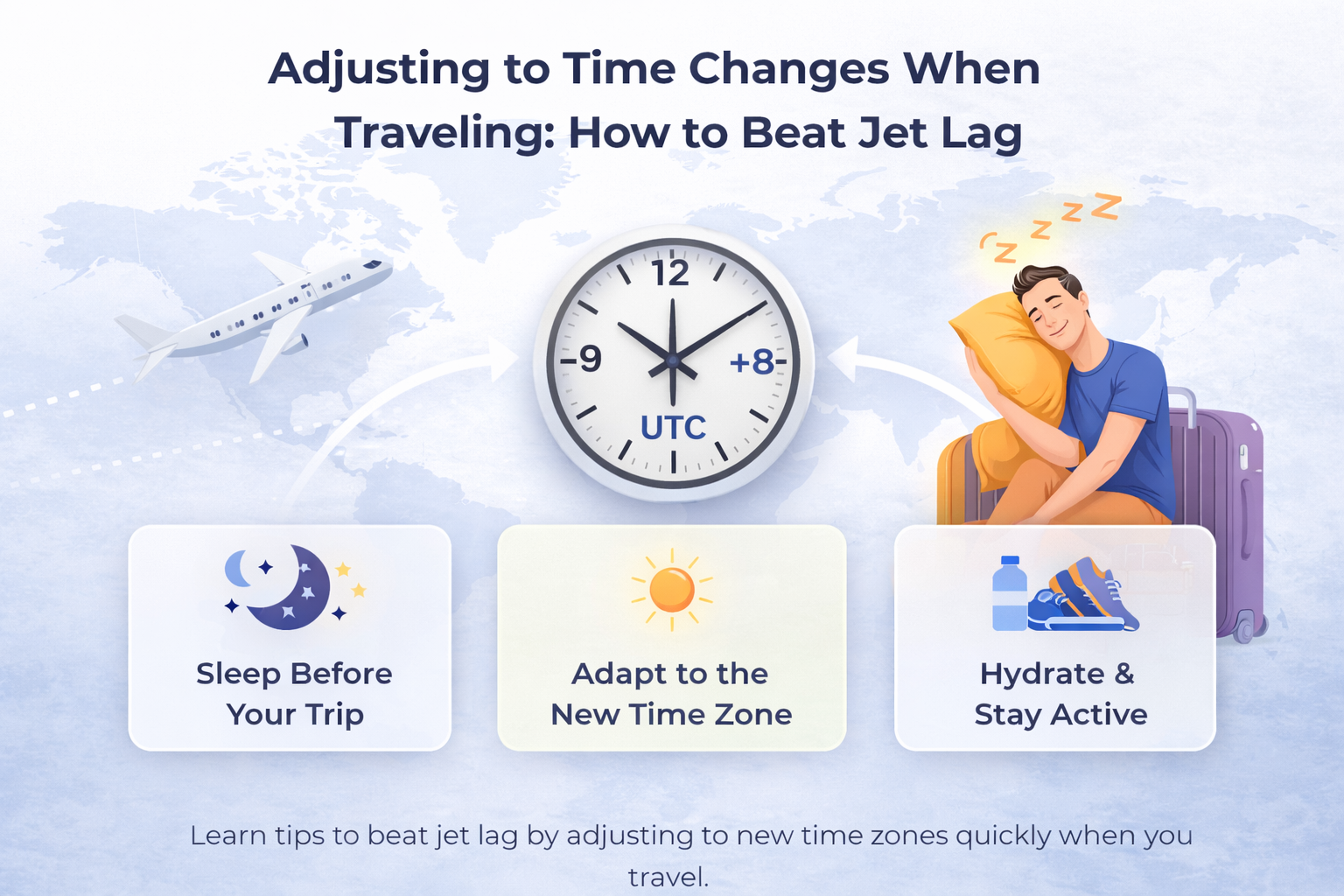
Traveling across multiple time zones can be exciting, but it can also disrupt your body’s internal clock. Many travelers experience jet lag, a temporary sleep disorder caused by rapid travel across different time zones.
Jet lag can lead to fatigue, difficulty sleeping, headaches, and reduced concentration. Fortunately, there are effective ways to adjust more quickly and make international travel more comfortable.
Understanding how time zones affect your body can help you prepare before your trip and recover faster after arrival.
What Causes Jet Lag?
Jet lag occurs when your circadian rhythm, the body’s natural sleep–wake cycle, becomes out of sync with the local time at your destination.
Your body is used to a regular pattern of:
waking up
eating meals
sleeping
When you travel across several time zones, this rhythm no longer matches the new environment.
The larger the time difference, the more noticeable jet lag may be.
How Time Zones Affect Your Body
Global time zones are organized based on Coordinated Universal Time (UTC), which serves as the reference for time worldwide.
Each region adjusts its local time relative to UTC.
For example:
When traveling between these locations, your body must adapt to a completely different schedule.
Common Symptoms of Jet Lag
Travelers may experience several symptoms when adjusting to a new time zone.
Typical signs include:
fatigue and low energy
trouble falling asleep
waking up too early
difficulty concentrating
mild headaches
digestive discomfort
These symptoms usually improve within a few days as your body adjusts.
Tips to Adjust to Time Changes Faster
There are several strategies that can help travelers reduce the effects of jet lag.
Adjust Your Schedule Before Departure
A few days before your trip, gradually shift your sleep schedule toward the time zone of your destination.
Even small adjustments can help your body prepare.
Stay Hydrated
Air travel can cause dehydration, which may worsen jet lag symptoms.
Drink plenty of water before, during, and after your flight.
Avoid excessive caffeine and alcohol while traveling.
Get Sunlight Exposure
Natural light is one of the most powerful signals for resetting your internal clock.
Spending time outdoors during daylight hours at your destination can help your body adjust faster.
Try to Sleep According to Local Time
Once you arrive, try to follow the local schedule.
Even if you feel tired, staying awake until the local bedtime can help your body adapt more quickly.
Take Short Naps Only if Necessary
Short naps of 20–30 minutes may help reduce fatigue, but long naps can make it harder to adjust to the new time zone.
How Long Does Jet Lag Last?
Jet lag recovery time varies depending on the number of time zones crossed.
A general guideline is that the body needs about one day to adjust per time zone.
For example:
Traveling east usually causes stronger jet lag than traveling west because it shortens your natural day.
Why Time Awareness Helps Travelers
Understanding global time zones can help travelers plan their trips more effectively.
Checking the current time at your destination before departure can help you mentally prepare for the time difference.
You can quickly see the current local time around the world using timenowonline.com, which makes it easier to plan calls, meetings, and travel schedules.
Final Thoughts
Jet lag is a common challenge for international travelers, but with the right preparation, it can be minimized. By adjusting your sleep schedule, staying hydrated, and following the local time at your destination, you can help your body adapt more quickly.
Understanding how global time zones work also makes travel planning easier and helps you stay connected with people around the world.
Time Now Online
Time Now Online delivers accurate, real-time local time for cities, countries, and time zones worldwide. Compare time zones, convert time instantly, and plan meetings with ease using our fast, free tools.
About Us
Legal
© 2026. All rights reserved.
Time data is based on standard global time zone databases and updates automatically.
Places & Seasons
time & meetings