
Australia Time Now
Live Australia time updated every second.
About Australia
Australia is the world's sixth largest country by total area and the largest country in the Southern Hemisphere, covering approximately 7.7 million square kilometres of land across a single continental landmass. Despite its enormous size, Australia has a relatively small population of around 26 million people, the vast majority of whom live in coastal cities along the eastern and southeastern seaboard. This makes Australia one of the most urbanised yet sparsely populated nations on earth, with vast stretches of outback, desert, and wilderness occupying the interior of the continent.
Australia is a wealthy, stable, and highly developed nation with the thirteenth largest economy in the world by nominal GDP. The country's prosperity is built on a foundation of natural resources, agriculture, finance, education, and tourism. Australia is one of the world's leading exporters of iron ore, coal, natural gas, gold, and agricultural products including beef, wheat, and wool. The mining industry in particular has been a cornerstone of the Australian economy for well over a century, and the country's vast mineral wealth continues to drive significant export revenue and economic growth.
The country was inhabited by Aboriginal and Torres Strait Islander peoples for at least 65,000 years before European settlement, making Indigenous Australians the custodians of one of the oldest continuous cultures and civilisations in human history. British colonisation began in 1788 with the establishment of a penal colony at Sydney Cove, and Australia gradually developed into a self-governing federation of six states, formally becoming the Commonwealth of Australia on 1 January 1901. Today the country is a constitutional monarchy with a parliamentary democracy, with King Charles III as the head of state represented by a Governor-General.
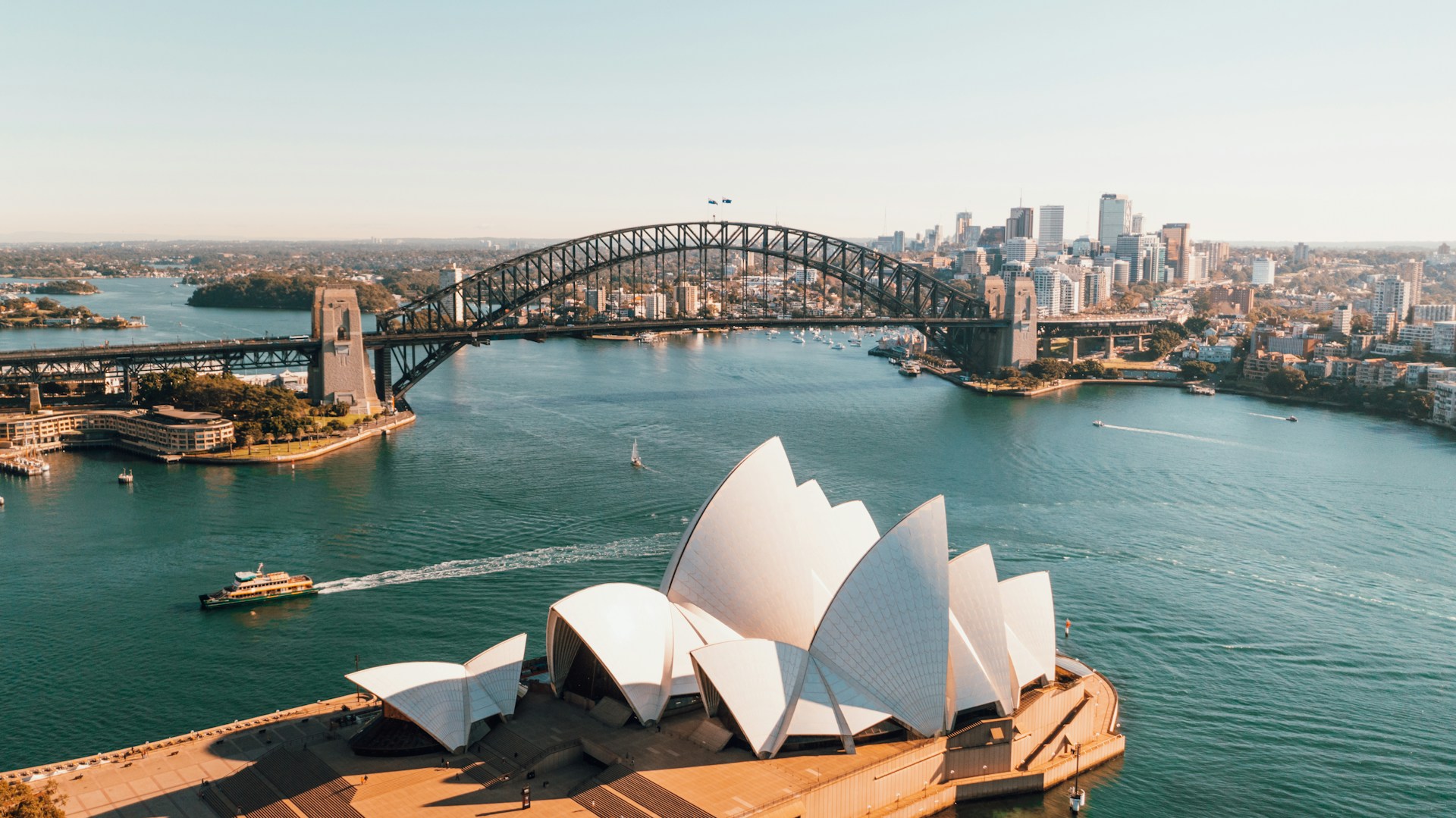
Australia's cities are among the most liveable in the world. Sydney, Melbourne, Brisbane, Perth, and Adelaide consistently rank in the top tier of global liveability indexes, offering residents high standards of healthcare, education, safety, and urban infrastructure. Sydney is the largest city and the country's financial and cultural capital, famous for its Opera House, Harbour Bridge, and world-renowned beaches. Melbourne is considered the cultural and culinary heart of Australia, known for its thriving arts scene, coffee culture, and passion for sport. Brisbane is the host city for the 2032 Olympic Games and is one of the fastest-growing major cities in the country.
The natural environment of Australia is extraordinary and unlike anywhere else on earth. The country is home to some of the world's most unique wildlife, including kangaroos, koalas, wombats, echidnas, and the platypus — one of the only egg-laying mammals in the world. The Great Barrier Reef, stretching over 2,300 kilometres along the Queensland coast, is the world's largest coral reef system and one of the seven natural wonders of the world. Uluru, the massive sandstone monolith rising from the red desert of the Northern Territory, is one of Australia's most iconic and spiritually significant landmarks. The Daintree Rainforest in Queensland is one of the oldest tropical rainforests on the planet, predating the Amazon by millions of years.
Australian culture is shaped by its Indigenous heritage, its British colonial history, and the waves of immigration from Europe, Asia, and the Middle East that have arrived over the past century. This cultural diversity is reflected in Australia's food, festivals, arts, and daily life. Australia has one of the highest rates of immigration per capita in the developed world, and today more than 30 percent of Australians were born overseas. This multicultural character gives Australian cities a cosmopolitan energy and a food scene that draws influences from cuisines across the entire globe.
Sport is deeply embedded in Australian culture and national identity. Australia punches well above its weight in international sport despite its relatively small population, consistently ranking among the top nations in the Olympic Games medal tally. Cricket, Australian rules football, rugby league, rugby union, tennis, and swimming are among the country's most popular sports. Australia has hosted the Olympic Games twice — Melbourne in 1956 and Sydney in 2000 — and will host them again in Brisbane in 2032.
For international professionals and remote teams, Australia's time zones are among the most complex of any single country. The country spans three main time zones — Australian Eastern Time, Australian Central Time, and Australian Western Time — with some states observing daylight saving time and others not. This means that the time difference between Sydney and Perth can be anywhere from 2 to 3 hours depending on the time of year, creating scheduling challenges even within Australia itself.
What Australia Is Famous For
The Great Barrier Reef – The world's largest coral reef system, stretching over 2,300 kilometres along the Queensland coast and a UNESCO World Heritage Site
Sydney Opera House – One of the most iconic and distinctive buildings in the world, a UNESCO World Heritage Site and the symbol of modern Australia
Uluru (Ayers Rock) – The massive sacred sandstone monolith rising from the red desert of the Northern Territory, one of Australia's most spiritually significant landmarks
Kangaroos and Koalas – Australia is home to some of the world's most unique wildlife, found nowhere else naturally on earth
Bondi Beach – Australia's most famous beach and one of the most recognised stretches of coastline in the world
The Outback – The vast, remote interior of Australia, covering millions of square kilometres of desert, savanna, and wilderness
Australian Rules Football – A uniquely Australian sport played at the Melbourne Cricket Ground before crowds of 100,000 people during the AFL Grand Final
Vegemite – Australia's iconic dark yeast extract spread, a beloved national food that divides opinion among international visitors
The Melbourne Cup – The world famous horse race dubbed "the race that stops a nation," held on the first Tuesday of November every year
World-class wine regions – The Barossa Valley, Hunter Valley, Margaret River, and Yarra Valley produce wines that compete with the finest in the world
Aboriginal culture – One of the oldest continuous cultures in human history, with a rich tradition of art, storytelling, music, and connection to the land stretching back over 65,000 years
Cricket – Australia is one of the dominant forces in international cricket, with a fierce rivalry with England in the biennial Ashes series
2000 Sydney Olympics – Widely regarded as one of the greatest Olympic Games in modern history, leaving a lasting legacy for the city and country
Surfing culture – Australia has produced some of the world's greatest surfers and has a deep beach and surf culture embedded in the national identity
Australia's Time Zones Explained in Full
Australia is one of the most time zone complex countries in the world for its size and population. Unlike the United States which has clear east-to-west time zone boundaries, Australia's time zone situation is complicated by the fact that not all states observe daylight saving time and one state — South Australia and the Northern Territory — uses a rare half-hour offset.
Key points to understand:
Queensland does not observe daylight saving time. This means that during Australian summer, Brisbane (Queensland) is 1 hour behind Sydney (New South Wales) despite both cities being on the eastern coast of the country. This regularly causes confusion for businesses and travellers moving between the two cities.
South Australia and the Northern Territory use UTC+9:30 — a rare half-hour offset that sets them apart from both the eastern and western states. Adelaide in South Australia observes daylight saving time and shifts to UTC+10:30 in summer, while Darwin in the Northern Territory stays on UTC+9:30 year-round.
Western Australia does not observe daylight saving time. Perth stays on AWST at UTC+8 year-round, meaning that during Australian eastern summer, Perth can be up to 3 hours behind Sydney.
Why Knowing Australia Time Matters
Understanding Australia’s time zones is important for travel, business, and staying connected internationally. Since different parts of the country operate in different time zones, knowing the correct local time helps avoid confusion when booking flights, scheduling meetings, or planning online activities.
Accurate time information is especially useful for global communication, ensuring that you stay on schedule no matter where you are in the world.
Australia's Most Famous Cities
Sydney Sydney is Australia's largest city and its most internationally recognised, home to approximately 5.3 million people. Built around one of the most beautiful natural harbours in the world, Sydney is famous for its Opera House — a UNESCO World Heritage Site and one of the most distinctive buildings ever constructed — and the Sydney Harbour Bridge, which stretches 1,149 metres across the harbour. Bondi Beach is Australia's most famous stretch of sand and one of the most visited beaches in the world. Sydney is the country's primary financial centre, home to the headquarters of major banks and the Australian Securities Exchange (ASX). The city hosted the 2000 Summer Olympic Games, widely regarded as one of the best in modern Olympic history.
Melbourne Melbourne is Australia's second largest city and the capital of Victoria, home to approximately 5.1 million people. It is consistently ranked among the world's most liveable cities and is considered the cultural, sporting, and culinary capital of Australia. Melbourne is home to the Australian Open tennis grand slam, the Melbourne Cup horse race — dubbed "the race that stops a nation" — and the Melbourne Cricket Ground (MCG), one of the largest cricket stadiums in the world. The city's laneway café culture, street art scene, and extraordinary diversity of restaurants reflecting over 150 nationalities make it a food and culture destination of global significance.
Brisbane Brisbane is the capital of Queensland and Australia's third largest city, home to approximately 2.5 million people. Known for its warm subtropical climate, relaxed lifestyle, and rapidly growing economy, Brisbane has transformed dramatically over the past two decades from a large regional city into a dynamic international metropolis. It will host the 2032 Summer Olympic and Paralympic Games, cementing its position as a city of global significance. The South Bank precinct, Story Bridge, and the nearby Gold Coast beaches make Brisbane a major tourism destination year-round.
Perth Perth is the capital of Western Australia and the most isolated major city in the world — it is closer to Singapore and Bali than it is to Sydney. Despite its remoteness, Perth is a thriving, modern city of approximately 2.1 million people, built around the Swan River and adjacent to some of Australia's most spectacular Indian Ocean beaches. Perth's economy is heavily driven by the mining and resources sector, with the city serving as the headquarters for many of Australia's largest mining and energy companies. The city enjoys more sunshine hours per year than almost any other capital city in the world.
Adelaide Adelaide is the capital of South Australia and home to approximately 1.4 million people. Known as the "City of Churches" for its historic architecture, Adelaide is also famous for its world-class wine regions — the Barossa Valley, McLaren Vale, and Clare Valley — which produce some of Australia's most celebrated wines. Adelaide hosts the Adelaide Fringe, the world's second largest arts festival after Edinburgh, and the Adelaide 500 motorsport event. The city is consistently praised for its affordability, liveability, and relaxed pace of life compared to Sydney and Melbourne.
Darwin Darwin is the capital of the Northern Territory and Australia's most northerly capital city, home to approximately 150,000 people. Located just 12 degrees south of the equator, Darwin experiences a tropical climate with a distinct wet and dry season rather than the four seasons experienced in southern Australia. The city is the gateway to some of Australia's most spectacular natural attractions, including Kakadu National Park and Litchfield National Park. Darwin's multicultural character — with strong Indigenous, Asian, and Pacific Islander communities — gives it a unique cultural identity unlike any other Australian city.
Time Difference Between Australia and Other Countries
Australia is ahead of many countries around the world, making it important to check the correct time when planning communication.
Australia is about 1 hour ahead of Japan.
Australia is around 9 to 11 hours ahead of London, depending on daylight saving time.
Australia is approximately 14 to 16 hours ahead of New York.
Australia is about 4.5 to 5.5 hours ahead of India.
These differences may vary depending on the time of year due to daylight saving changes.
Australia Business Hours and ASX Trading Times
Standard Australian Business Hours: Most Australian businesses and government offices operate Monday to Friday, 9 AM to 5 PM in their local time zone. Retail hours vary by state, with some states having more restricted Sunday trading than others. Public holidays also vary significantly between states, which can affect business availability.
Australian Securities Exchange (ASX) Trading Hours:
Pre-open session: 7:00 AM – 10:00 AM AEST
Market opens: 10:00 AM AEST
Market closes: 4:00 PM AEST
After-hours trading: 4:12 PM – 7:00 PM AEST
Australia Weather and Seasons
One of the most important things to understand about Australia is that its seasons are the opposite of the Northern Hemisphere. When it is summer in the United States and Europe (June to August), it is winter in Australia. When it is winter in Europe (December to February), Australia is in the middle of its summer.
Summer (December – February) Australian summer is hot across most of the country. Sydney and Melbourne experience temperatures regularly exceeding 35°C (95°F) during January and February. The far north of Australia — including Darwin and Cairns — experiences its wet season during this period, with heavy tropical rainfall and high humidity. Summer is also Australia's bushfire season, with hot, dry, and windy conditions in southern and eastern Australia creating fire risk across large areas of bush and farmland.
Autumn (March – May) Autumn brings cooler and more comfortable temperatures to southern Australia. Sydney and Melbourne cool down to pleasant ranges of 15°C to 25°C (59°F to 77°F). Daylight saving time ends on the first Sunday of April in the states that observe it, with clocks moving back one hour. Autumn is considered one of the best seasons for visiting Australia's wine regions, with harvest taking place across the Barossa Valley, Hunter Valley, and Margaret River.
Winter (June – August) Australian winters are mild in most major cities compared to Northern Hemisphere standards. Sydney rarely experiences frost, with winter temperatures typically ranging from 8°C to 17°C (46°F to 63°F). Melbourne is cooler and can experience occasional frost and cold snaps. The Australian Alps in New South Wales and Victoria receive snowfall during winter, supporting ski resorts at Perisher, Thredbo, and Falls Creek. Queensland and the Northern Territory experience their best and most pleasant weather during the Australian winter, making it peak tourist season in the north.
Spring (September – November) Spring is one of the most popular seasons to visit Australia, particularly in the south. Wildflowers bloom across Western Australia in spectacular displays that draw visitors from around the world. Temperatures rise comfortably across southern cities, and daylight saving time begins again on the first Sunday of October in applicable states. The Sydney to Hobart Yacht Race and numerous spring racing carnival events, including the Melbourne Cup, make this a vibrant and festive season across the country.
Interesting Time Facts About Australia
Australia is one of the only countries in the world to use a half-hour time zone offset — South Australia and the Northern Territory observe UTC+9:30, one of fewer than a dozen such offsets used anywhere on earth
Queensland's refusal to observe daylight saving time has been a source of ongoing debate for decades. A referendum on the issue was held in 1992 and the result was a clear majority against DST, largely driven by farmers and rural communities in the state's north who opposed the change
During Australian summer, Sydney is UTC+11, making it one of the furthest ahead time zones of any major global city and meaning Sydney is among the first major financial centres to begin the business day each morning
The time difference between Sydney and Perth changes throughout the year — it is 2 hours during Perth's standard time and 3 hours when Sydney observes daylight saving, creating scheduling complications for businesses operating across both cities
Australia's Lord Howe Island, a tiny island territory in the Tasman Sea, observes its own unique time zone at UTC+10:30 during standard time and UTC+11 during daylight saving — one of the most unusual time zone arrangements of any inhabited territory on earth
When it is New Year's Eve, Australia is among the first countries in the world to welcome the new year, with Sydney's famous fireworks display over the Harbour Bridge broadcast live to billions of viewers worldwide several hours before midnight strikes in Asia, Europe, and the Americas
Frequently asked questions
What time zone is Australia in?
Australia has multiple time zones. The main ones are Australian Eastern Standard Time (AEST) at UTC+10, Australian Central Standard Time (ACST) at UTC+9:30, and Australian Western Standard Time (AWST) at UTC+8. During daylight saving time, eastern states shift to AEDT at UTC+11.
What is the time difference between Sydney and New York?
Sydney is typically 14 to 16 hours ahead of New York depending on daylight saving time in both countries. This large difference means that scheduling calls between Australia and the US East Coast requires one party to be available outside standard business hours.
Does Australia observe daylight saving time?
Not all of Australia observes daylight saving time. New South Wales, Victoria, South Australia, Tasmania, and the ACT observe DST, moving clocks forward one hour from the first Sunday of October to the first Sunday of April. Queensland, Western Australia, and the Northern Territory do not observe DST.
What is the time difference between Sydney and Singapore?
Sydney is 2 to 3 hours ahead of Singapore. Singapore observes SGT at UTC+8 year-round, while Sydney shifts between AEST (UTC+10) and AEDT (UTC+11) depending on daylight saving time.
Why doesn't Queensland observe daylight saving time?
Queensland held a referendum in 1992 and voted against daylight saving time, primarily due to opposition from rural and farming communities in the state's north who argued the time change disrupted livestock routines and created confusion with neighbouring states.
What is the time difference between Sydney and London?
Sydney is typically 9 to 11 hours ahead of London depending on daylight saving time in both countries. During Australian summer when Sydney is on AEDT (UTC+11) and the UK is on GMT (UTC+0), the difference is 11 hours. When both observe standard time, the difference narrows.
What is the time difference between Sydney and Dubai?
Sydney is 6 to 7 hours ahead of Dubai. Dubai observes GST at UTC+4 year-round, while Sydney is on UTC+10 or UTC+11 depending on the time of year.
What is the best time to call Australia from the UK?
The best time to call Sydney from London is early morning in London between 7 AM and 9 AM GMT, which corresponds to late afternoon or early evening in Sydney (5 PM to 7 PM AEST). This is the most practical overlap for UK-Australia business calls.
What is the best time to call Australia from the US?
The best time to call Sydney from New York is late afternoon or early evening on the US East Coast, between 5 PM and 8 PM EST, which corresponds to early morning the following day in Sydney (7 AM to 10 AM AEST).
Is Sydney the capital of Australia?
No. Canberra is the capital of Australia. Sydney is the largest city and the financial capital, but the national capital is Canberra in the Australian Capital Territory (ACT). Melbourne and Sydney both lobbied to be the capital, so Canberra was built as a compromise location between the two cities.
What is AEST?
AEST stands for Australian Eastern Standard Time. It is UTC+10 and is observed by New South Wales, Victoria, Queensland, Tasmania, and the Australian Capital Territory during standard time. During daylight saving time the eastern states (except Queensland) shift to AEDT at UTC+11.
How many time zones does Australia have?
Australia has five main time zones: AWST (UTC+8), ACST (UTC+9:30), ACDT (UTC+10:30), AEST (UTC+10), and AEDT (UTC+11). Including external territories, Australia has even more time zone variations, making it one of the most time zone complex countries in the world relative to its population.
Time Now Online
Time Now Online delivers accurate, real-time local time for cities, countries, and time zones worldwide. Compare time zones, convert time instantly, and plan meetings with ease using our fast, free tools.
About Us
Legal
© 2026. All rights reserved.
Time data is based on standard global time zone databases and updates automatically.
Places & Seasons
time & meetings
