a red and yellow flag

Bhutan Time Now

Stay updated with the current time in Bhutan and plan your calls, travel, and business activities with confidence. Bhutan follows Bhutan Time (BTT), which is UTC+6 throughout the year.

Bhutan does not observe daylight saving time, so the local time remains consistent across all regions year-round.

Whether you are coordinating with teams, planning a trip, or scheduling international meetings, understanding Bhutan time can help you stay organised and avoid confusion.

About Bhutan

Bhutan is a small Himalayan country located in South Asia between China and India, known for its breathtaking mountain landscapes, peaceful culture, Buddhist heritage, and strong focus on happiness and environmental conservation. The capital city of Bhutan is Thimphu, while other well-known areas include Paro, Punakha, and Phuentsholing.

Bhutan is unique because it measures national progress through Gross National Happiness (GNH) rather than focusing only on economic growth. The country places strong importance on sustainable development, cultural preservation, environmental protection, and community well-being.

Bhutan follows Bhutan Time (BTT), which is set at UTC+6 throughout the year. The country does not observe daylight saving time, so local time remains stable and consistent year-round.

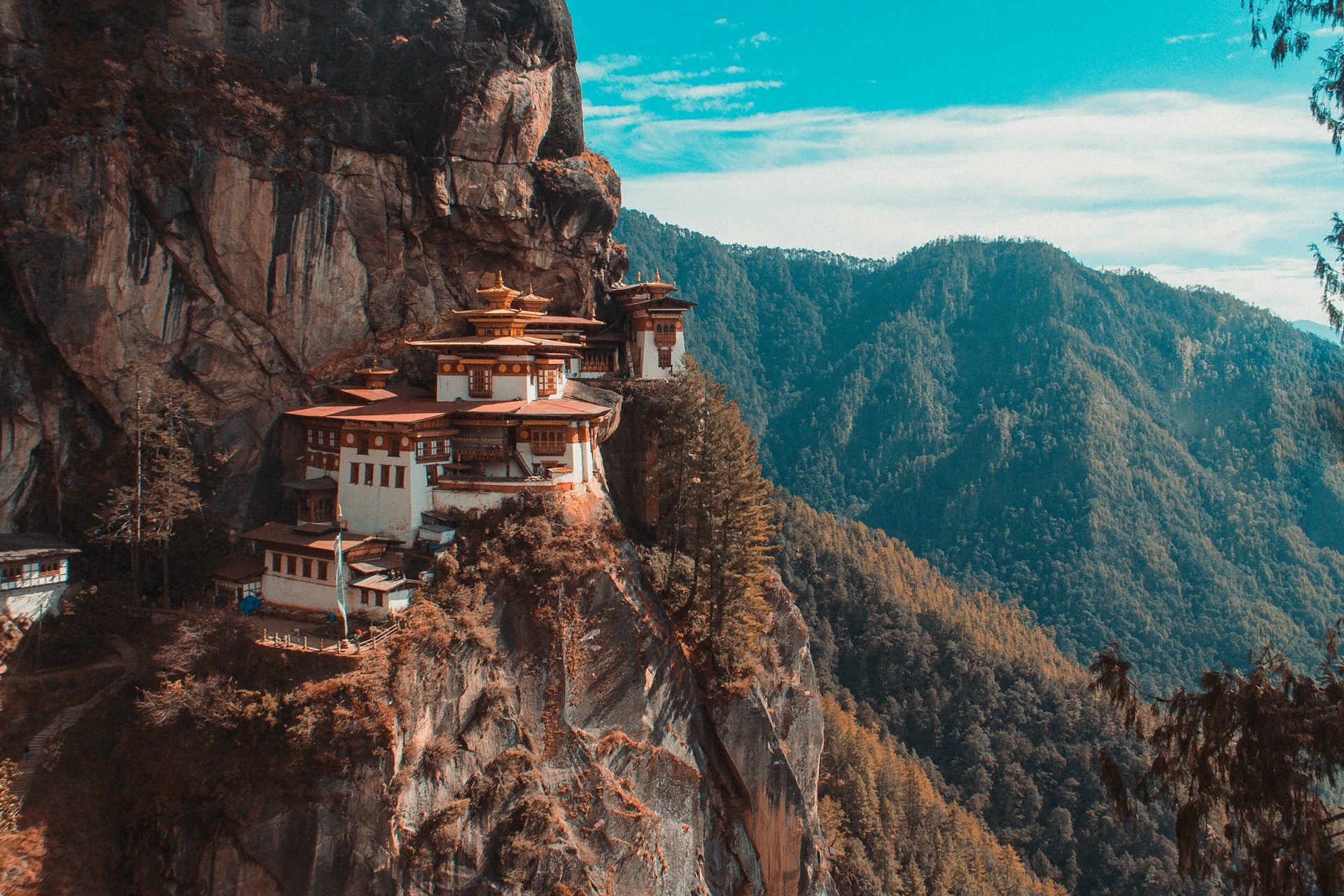
The country is famous for its dramatic mountain scenery, ancient monasteries, colourful festivals, and traditional architecture. One of Bhutan’s most iconic landmarks is the Tiger’s Nest Monastery (Paro Taktsang), built on a cliffside high above the Paro Valley.

Bhutan’s landscape includes snow-capped Himalayan peaks, deep valleys, forests, rivers, and national parks rich in biodiversity. The country is one of the few carbon-negative nations in the world, with large areas protected by forests and conservation programs.

Tourism in Bhutan is carefully managed to preserve the country’s culture and environment. Visitors often travel to Bhutan to experience peaceful monasteries, trekking routes, Buddhist traditions, mountain views, and cultural festivals known as Tshechus.

Bhutan’s economy is supported by hydropower, agriculture, forestry, tourism, and small-scale industries. Hydropower exports to neighbouring countries, especially India, play an important role in the economy.

The official language of Bhutan is Dzongkha, although English is widely used in education, tourism, and government. Bhutanese culture is strongly influenced by Tibetan Buddhism, which shapes many aspects of daily life, traditions, festivals, and architecture.

Bhutan is often described as one of the world’s most peaceful and scenic destinations, attracting travellers looking for nature, spirituality, culture, and authentic Himalayan experiences.

Bhutan Quick Facts Table

buddha photography

Bhutan operates on a single time zone nationwide, meaning the entire country follows the same local time across all cities and regions.

This keeps timekeeping simple and consistent throughout Bhutan, from the capital city of Thimphu to major areas such as Paro, Punakha, Phuentsholing, and Wangdue Phodrang.

Bhutan follows Bhutan Time (BTT), which is set at UTC+6 throughout the entire year.

Bhutan does not observe daylight saving time, so the local time remains stable year-round without seasonal clock changes.

Understanding Bhutan Time

Bhutan’s time system is aligned with several neighbouring South Asian countries that also follow nearby UTC offsets.

Because Bhutan maintains a fixed time zone all year, international scheduling is often simpler compared to countries that change clocks seasonally.

Daily life in Bhutan typically starts in the morning, with businesses, schools, markets, tourism services, and government offices operating throughout the day, especially in busy areas like Thimphu and Paro.

For international coordination, knowing the current time in Bhutan is useful for planning:

  • Business meetings

  • International calls

  • Remote work schedules

  • Travel itineraries

  • Tourism and trekking activities

  • Online meetings and conferences

Since Bhutan remains on UTC+6 all year, the time difference with other countries may still shift seasonally when those countries enter or leave daylight saving time.

What Time Is It in Bhutan Right Now?

Bhutan Time vs Major World Cities

Bhutan follows Bhutan Time (BTT) throughout the year and remains fixed at UTC+6.

Because Bhutan does not observe daylight saving time, international time differences may still shift slightly when other countries adjust their clocks seasonally.

Note: Bhutan stays on Bhutan Time (BTT), UTC+6 all year and does not change clocks for daylight saving time. Time differences with cities such as London, Sydney, and New York may still vary slightly when those locations adjust their clocks seasonally.

Best Time to Call Bhutan

From Australia

Bhutan is generally 2–5 hours behind Australia, depending on the Australian city and daylight saving time.

  • Sydney / Melbourne: Bhutan is usually 4–5 hours behind, depending on daylight saving time in Australia.

  • Brisbane: Bhutan is generally 4 hours behind.

  • Perth: Bhutan is usually 2 hours behind.

For business calls, aim for:

  • Late afternoon to evening in Australia (4:00 PM – 9:00 PM)
    to reach:

  • 12:00 PM – 5:00 PM in Bhutan

For the best overlap during business hours, try:

  • 5:00 PM – 8:00 PM Sydney time
    to reach:

  • 1:00 PM – 4:00 PM in Bhutan

From the United Kingdom

Bhutan is usually 5–6 hours ahead of the UK, depending on British Summer Time (BST).

  • Call between 7:00 AM and 1:00 PM UK time
    to reach:

  • 12:00 PM – 6:00 PM in Bhutan

Business coordination between Bhutan and the UK is manageable during overlapping daytime hours.

From the United States

Bhutan is significantly ahead of the United States, so timing depends on the region.

  • East Coast (New York): Bhutan is usually 10–11 hours ahead.

  • West Coast (Los Angeles): Bhutan is usually 13–14 hours ahead.

Recommended call times:

  • New York: Call between 7:00 PM and 10:00 PM ET

  • Los Angeles: Call between 4:00 PM and 7:00 PM PT

Evening calls in the US are often needed to reach Bhutan during standard business hours.

From Asia

Many Asian countries are only a few hours apart from Bhutan, making coordination easier.

Recommended times:

  • Southeast Asia: 10:00 AM – 6:00 PM local time

  • Japan / South Korea: 11:00 AM – 7:00 PM local time

Afternoon and evening calls across Asia usually provide the best overlap.

From the Middle East

Bhutan shares manageable working-hour overlap with several Middle Eastern countries.

  • UAE: Bhutan is usually 2 hours ahead.

  • Saudi Arabia / Kuwait / Qatar: Bhutan is usually 3 hours ahead.

This allows practical coordination for business, travel, and international communication.

Paro Taktsang temple in Bhutan viewing mountain under blue and white sky

Famous Cities and Regions in Bhutan

  • Thimphu — The capital and largest city of Bhutan, known for government institutions, traditional Bhutanese architecture, monasteries, and cultural festivals.

  • Paro — One of Bhutan’s most visited regions, famous for Paro Taktsang (Tiger’s Nest Monastery), scenic valleys, and Bhutan’s international airport.

  • Punakha — A historic former capital recognised for the beautiful Punakha Dzong, riverside landscapes, suspension bridges, and religious significance.

  • Phuentsholing — Bhutan’s main commercial border town with India, important for trade, transportation, and business activity.

  • Bumthang Valley — A spiritual and cultural heartland known for ancient temples, monasteries, peaceful valleys, and traditional Bhutanese villages.

  • Trongsa — A historic central Bhutan town famous for Trongsa Dzong and its connection to Bhutan’s royal history.

  • Wangdue Phodrang — A scenic district recognised for agriculture, monasteries, mountain landscapes, and traditional craftsmanship.

  • Haa Valley — A peaceful Himalayan valley popular for eco-tourism, hiking, traditional Bhutanese culture, and natural beauty.

  • Jakar — The main town of Bumthang, known for Buddhist monasteries, spiritual tourism, and cultural heritage sites.

  • Eastern Bhutan Region — A quieter region recognised for weaving traditions, rural mountain communities, forests, and authentic Bhutanese culture.

Bhutan has a developing economy supported by hydropower, agriculture, tourism, forestry, and small-scale industries. The country’s business and commercial activities are mainly centred around Thimphu and Phuentsholing.

Bhutanese business sectors include:

  • Hydropower and renewable energy

  • Agriculture and organic farming

  • Tourism and hospitality

  • Forestry and natural resources

  • Handicrafts and traditional textiles

  • Construction and infrastructure

  • Retail and local trade

  • Telecommunications and public services

Bhutan’s economy is closely connected with neighbouring India through trade, energy exports, transport, and regional cooperation.

Most business offices in Bhutan generally operate between 9:00 AM and 5:00 PM, Monday to Friday, while tourism-related businesses may stay open longer during peak travel seasons.

Bhutan’s Himalayan location, focus on sustainability, and commitment to Gross National Happiness make it internationally recognised for eco-tourism, environmental protection, and cultural preservation.

Note: Bhutan follows Bhutan Time (BTT), UTC+6 all year and does not observe daylight saving time. Market hour differences may still shift when other countries adjust their clocks seasonally.

Stock Exchange and Business Hours in Bhutan

A house in the middle of a mountain range

What Bhutan Is Famous For

  • Gross National Happiness (GNH) — Bhutan is internationally recognised for prioritising Gross National Happiness, focusing on well-being, sustainability, culture, and environmental protection over rapid economic growth.

  • Himalayan mountain landscapes — Bhutan is famous for its breathtaking Himalayan scenery, deep valleys, forests, snow-capped peaks, and peaceful mountain villages.

  • Tiger’s Nest Monastery (Paro Taktsang) — One of Bhutan’s most iconic landmarks, this cliffside Buddhist monastery attracts visitors from around the world.

  • Strong Buddhist culture and traditions — Bhutan preserves ancient Buddhist customs, monasteries, prayer flags, festivals, and traditional ways of life throughout the country.

  • Traditional architecture — Bhutanese dzongs, monasteries, temples, and traditional homes are known for their unique wooden designs and colourful craftsmanship.

  • Colorful festivals (Tshechus) — Bhutan hosts vibrant religious festivals featuring masked dances, music, ceremonies, and cultural celebrations.

  • Environmental conservation — Bhutan is one of the world’s few carbon-negative countries and protects large areas of forest and natural wildlife habitats.

  • Peaceful and low-impact tourism — Bhutan is known for controlled tourism policies that focus on cultural preservation and sustainable travel experiences.

  • Rich wildlife and trekking routes — The country offers mountain trekking, national parks, rare wildlife, and scenic nature adventures across the Himalayas.

  • Traditional arts and handicrafts — Bhutan is famous for handmade textiles, wood carving, painting, weaving, and traditional artisan skills passed through generations.

Weather and Seasons in Bhutan

Bhutan has a mountain climate, meaning temperatures and weather conditions vary depending on altitude and region throughout the country.

Unlike tropical countries, Bhutan experiences four distinct seasons, with cooler temperatures in high mountain regions and milder weather in valleys.

🌸 Spring (March – May)

Spring is one of the most beautiful times to visit Bhutan, with blooming flowers, green valleys, and comfortable temperatures.

  • Temperatures usually range from 10°C to 25°C

  • Rhododendron flowers bloom across mountain regions

  • Excellent season for trekking and sightseeing

  • Popular time for cultural festivals and photography

☀️ Summer / Monsoon (June – August)

Summer brings warmer weather and seasonal monsoon rainfall, especially in southern and eastern areas.

  • Temperatures often range from 15°C to 30°C

  • Increased rainfall and cloudy conditions

  • Forests and landscapes become lush and vibrant

  • Some mountain trekking routes may become slippery

🍂 Autumn (September – November)

Autumn is considered the peak travel season due to clear skies and pleasant temperatures.

  • Temperatures generally range from 10°C to 24°C

  • Clear Himalayan mountain views

  • Ideal conditions for trekking and outdoor activities

  • Major festivals and cultural events take place during this season

❄️ Winter (December – February)

Winter is colder, especially in northern mountain areas, while valleys remain relatively manageable.

  • Temperatures can range from -5°C to 15°C

  • Snowfall occurs in higher elevations

  • Clear skies and crisp mountain scenery

  • Fewer tourists and peaceful travel conditions

🌿 Overall Climate Experience

Bhutan enjoys fresh mountain air, scenic landscapes, and seasonal variation throughout the year. Climate conditions depend heavily on elevation, with southern regions warmer and northern Himalayan areas significantly colder.

Facts About Bhutan

  1. Bhutan uses Bhutan Time (BTT), UTC+6. The country follows one official time zone nationwide.

  2. Bhutan does not observe daylight saving time. Local time remains consistent throughout the year.

  3. Thimphu is the capital and largest city of Bhutan. It serves as the country’s political, cultural, and administrative centre.

  4. Bhutan is located in the Eastern Himalayas. It shares borders with China and India.

  5. Dzongkha is the official language of Bhutan. English is also widely used in education and government.

  6. Bhutan is famous for Gross National Happiness (GNH). The country focuses strongly on well-being, sustainability, and environmental protection.

  7. Buddhism plays an important role in Bhutanese culture. Monasteries, festivals, and traditional customs remain deeply connected to daily life.

  8. Bhutan is known for mountain scenery and monasteries. Attractions such as Tiger’s Nest Monastery and Himalayan trekking routes attract visitors from around the world.

people in brown and blue costume standing on brown field during daytime

Frequently Asked Questions About Bhutan

1. What time zone does Bhutan use?

Bhutan uses Bhutan Time (BTT), which is set at UTC+6 throughout the entire year.

2. Does Bhutan observe daylight saving time?

No. Bhutan does not observe daylight saving time, so the local time remains the same year-round.

3. How many time zones are in Bhutan?

Bhutan has one official time zone covering the entire country.

4. What is the capital city of Bhutan?

The capital city of Bhutan is Thimphu, which is also the country’s largest city.

5. Is Bhutan ahead or behind India in time?

Bhutan is 30 minutes ahead of India. Bhutan follows UTC+6, while India follows UTC+5:30.

6. What language is spoken in Bhutan?

The official language of Bhutan is Dzongkha, although English is widely used in schools, tourism, and government.

7. What is Bhutan famous for?

Bhutan is famous for its Himalayan mountains, Buddhist culture, Tiger’s Nest Monastery, Gross National Happiness philosophy, and beautiful landscapes.

8. When is the best time to visit Bhutan?

The best times to visit Bhutan are usually spring (March–May) and autumn (September–November) when the weather is pleasant and mountain views are clear.

a building with many umbrellas in the snow

Explore More Country Time Zones

🌏 Closest Time Zones (Same or Near)

🏔️ Himalayan & Regional Connections