
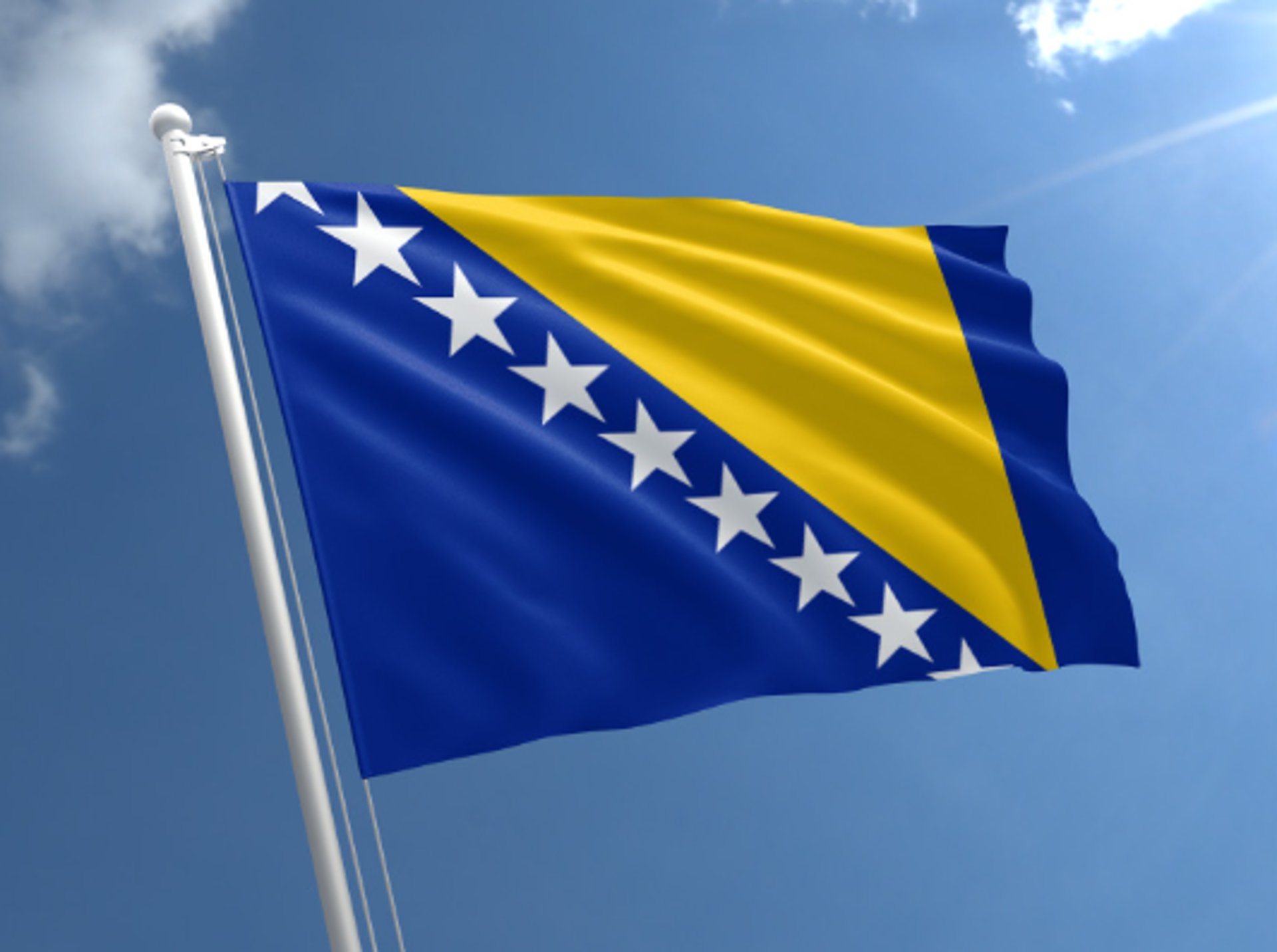
a flag on a pole

Bosnia and Herzegovina Time Now

Stay updated with the current time in Bosnia and Herzegovina and plan your calls, travel, and business activities with confidence. Bosnia and Herzegovina follows Central European Time (CET) during standard time and Central European Summer Time (CEST) during daylight saving periods.

Bosnia and Herzegovina observes daylight saving time, typically changing clocks in March and October each year alongside many European countries.

Whether you are coordinating with teams, planning a holiday, or scheduling international meetings, understanding Bosnia and Herzegovina time can help you stay organised and avoid confusion.

About Bosnia and Herzegovina

Bosnia and Herzegovina is a beautiful country located in Southeast Europe on the Balkan Peninsula. Known for its rich history, mountain landscapes, Ottoman and Austro-Hungarian architecture, and multicultural heritage, the country offers a unique blend of Eastern and Western European influences.

The capital city is Sarajevo, a historic city often called the “Jerusalem of Europe” because of its long tradition of religious and cultural diversity. Other major cities include Mostar, famous for its iconic Old Bridge (Stari Most), Banja Luka, Tuzla, and Zenica.

Bosnia and Herzegovina is surrounded by Croatia, Serbia, and Montenegro, with a small coastline along the Adriatic Sea near the town of Neum. The country is known for scenic rivers, forests, waterfalls, and mountain ranges, making it a popular destination for nature lovers and outdoor activities such as hiking, rafting, skiing, and sightseeing.

The country has a diverse cultural identity shaped by Bosniak, Croat, and Serb communities. Traditional food, music, festivals, and local customs play an important role in everyday life. Popular dishes include cevapi, burek, grilled meats, and strong Bosnian coffee.

Bosnia and Herzegovina operates on Central European Time (CET) during standard time and Central European Summer Time (CEST) during daylight saving periods. The country observes daylight saving time alongside many other European nations.

Tourism continues to grow in Bosnia and Herzegovina due to its historic old towns, affordable travel experiences, UNESCO World Heritage sites, and stunning natural scenery. Visitors are often attracted by the combination of Ottoman-era architecture, mountain villages, rivers, lakes, and warm hospitality.

The economy of Bosnia and Herzegovina is supported by manufacturing, energy production, tourism, agriculture, trade, and services. The country also has strong cultural ties with both Central Europe and the Balkans, making it an important regional crossroads in Southeast Europe.

Bosnia and Herzegovina Quick Facts Table

brown arch bridge near concrete buildings and green-leafed trees during daytime

Bosnia and Herzegovina operates on a single time zone nationwide, meaning the entire country follows the same local time across all cities and regions.

This keeps timekeeping simple and consistent throughout Bosnia and Herzegovina, from the capital city of Sarajevo to major areas such as Mostar, Banja Luka, Tuzla, and Zenica.

Bosnia and Herzegovina follows Central European Time (CET), which is set at UTC+1 during standard time.

Bosnia and Herzegovina observes daylight saving time, switching to Central European Summer Time (CEST) at UTC+2 during the warmer months.

Understanding Bosnia and Herzegovina Time

Bosnia and Herzegovina’s time system is aligned with many Central and Southeast European countries that also follow CET and CEST.

Because Bosnia and Herzegovina changes clocks for daylight saving time, international scheduling may shift slightly during the year.

Daily life in Bosnia and Herzegovina typically starts in the morning, with businesses, schools, markets, tourism services, and government offices operating throughout the day, especially in major cities like Sarajevo and Banja Luka.

For international coordination, knowing the current time in Bosnia and Herzegovina is useful for planning:

  • Business meetings

  • International calls

  • Remote work schedules

  • Travel itineraries

  • Tourism and cultural activities

  • Online meetings and conferences

Since Bosnia and Herzegovina switches between UTC+1 and UTC+2, always check the current local time when scheduling across countries.

What Time Is It in Bosnia and Herzegovina Right Now?

Bosnia and Herzegovina Time vs Major World Cities

Bosnia and Herzegovina follows Central European Time (CET) during standard time and changes to Central European Summer Time (CEST) during daylight saving periods.

Because Bosnia and Herzegovina observes daylight saving time, international time differences may shift slightly when other countries also adjust their clocks seasonally.

Best Time to Call Bosnia and Herzegovina

From Australia

Bosnia and Herzegovina is generally 8–10 hours behind Australia, depending on the Australian city and daylight saving time.

  • Sydney / Melbourne: Bosnia and Herzegovina is usually 8–10 hours behind, depending on daylight saving time in Australia.

  • Brisbane: Bosnia and Herzegovina is generally 8 hours behind.

  • Perth: Bosnia and Herzegovina is usually 6 hours behind.

For business calls, aim for:

  • Late afternoon to evening in Australia (4:00 PM – 9:00 PM)
    to reach:

  • 8:00 AM – 1:00 PM in Bosnia and Herzegovina

For the best overlap during business hours, try:

  • 5:00 PM – 8:00 PM Sydney time
    to reach:

  • 9:00 AM – 12:00 PM in Bosnia and Herzegovina

From the United Kingdom

Bosnia and Herzegovina is usually on the same time as the UK during British Summer Time (BST) and 1 hour ahead during GMT.

  • Call between 8:00 AM and 5:00 PM UK time
    to reach:

  • 8:00 AM – 6:00 PM in Bosnia and Herzegovina

Business coordination between Bosnia and Herzegovina and the UK is generally convenient because of the small time difference.

From the United States

Bosnia and Herzegovina is significantly ahead of the United States, so timing depends on the region.

  • East Coast (New York): Bosnia and Herzegovina is usually 6 hours ahead.

  • West Coast (Los Angeles): Bosnia and Herzegovina is usually 9 hours ahead.

Recommended call times:

  • New York: Call between 6:00 AM and 11:00 AM ET

  • Los Angeles: Call between 3:00 AM and 8:00 AM PT

Morning calls in the US are often required to reach Bosnia and Herzegovina during standard business hours.

From Asia

Many Asian countries are several hours ahead of Bosnia and Herzegovina.

Recommended times:

  • Southeast Asia: 3:00 PM – 9:00 PM local time

  • Japan / South Korea: 4:00 PM – 10:00 PM local time

Afternoon and evening calls across Asia generally provide the best overlap.

From the Middle East

Bosnia and Herzegovina shares manageable working-hour overlap with several Middle Eastern countries.

  • UAE: Bosnia and Herzegovina is usually 2–3 hours behind.

  • Saudi Arabia / Kuwait / Qatar: Bosnia and Herzegovina is usually 1–2 hours behind.

This allows practical coordination for business, travel, and international communication.

aerial view of city during daytime

Famous Cities and Regions in Bosnia and Herzegovina

  • Sarajevo — The capital city of Bosnia and Herzegovina, known for its Ottoman and Austro-Hungarian architecture, cultural diversity, historical landmarks, and vibrant old town.

  • Mostar — One of the country’s most famous tourist destinations, recognised for the iconic Stari Most (Old Bridge), riverside scenery, and historic Ottoman heritage.

  • Banja Luka — The second-largest city, known for green parks, universities, cafes, fortresses, and its role as the administrative centre of Republika Srpska.

  • Tuzla — An industrial and cultural city famous for its salt lakes, energy industry, universities, and lively local atmosphere.

  • Zenica — A major central Bosnian city recognised for steel production, business activity, and surrounding mountain landscapes.

  • Jajce — A historic town famous for its spectacular waterfall, medieval fortress, lakes, and historical importance in Bosnian history.

  • Neum — Bosnia and Herzegovina’s only coastal town, known for Adriatic Sea beaches, tourism, and seaside resorts.

  • Travnik — A scenic historic town recognised for Ottoman architecture, mountain surroundings, traditional culture, and the Travnik Fortress.

  • Bihać — A northwestern city popular for natural beauty, rivers, waterfalls, and access to Una National Park.

  • Herzegovina Region — A southern region famous for vineyards, Mediterranean climate, historic monasteries, and picturesque countryside.

Bosnia and Herzegovina has a developing economy supported by manufacturing, energy, trade, tourism, agriculture, and regional commerce. Business and financial activities are mainly centred around Sarajevo, Banja Luka, Mostar, and Tuzla.

Key business sectors in Bosnia and Herzegovina include:

  • Manufacturing and metal industries

  • Energy and hydropower production

  • Agriculture and food processing

  • Tourism and hospitality

  • Banking and financial services

  • Retail and local trade

  • Construction and infrastructure

  • Transportation and logistics

  • Information technology and telecommunications

Bosnia and Herzegovina maintains strong trade and economic connections with neighbouring Balkan countries and the wider European market through transport, tourism, exports, and regional cooperation.

Most business offices in Bosnia and Herzegovina generally operate between 8:00 AM and 5:00 PM, Monday to Friday, while restaurants, shopping centres, and tourism-related businesses may remain open later depending on the city and season.

Bosnia and Herzegovina’s mix of historical heritage, mountain tourism, growing business sectors, and strategic Balkan location make it an important destination for regional commerce, tourism, and cultural exchange in Southeast Europe.

Note: Bosnia and Herzegovina follows Central European Time (CET), UTC+1 during standard time and Central European Summer Time (CEST), UTC+2 during daylight saving time. Market hour differences may shift slightly when Bosnia and Herzegovina or other countries adjust their clocks seasonally.

Stock Exchange and Business Hours in Bosnia and Herzegovina

a statue in front of a building with a clock tower

What Bosnia and Herzegovina Is Famous For

  • Historic multicultural heritage — Bosnia and Herzegovina is known for its unique blend of Ottoman, Austro-Hungarian, and Slavic cultural influences visible in architecture, cuisine, traditions, and daily life.

  • Sarajevo — The capital city is famous for its historic old town, cultural diversity, mountain scenery, and its role in important European historical events.

  • Mostar and the Old Bridge (Stari Most) — One of the country’s most iconic landmarks, recognised for its beautiful Ottoman-era bridge, riverside views, and UNESCO World Heritage status.

  • Mountain landscapes and nature — Bosnia and Herzegovina features stunning mountains, rivers, waterfalls, forests, and outdoor adventure destinations across the Balkans.

  • Winter sports and skiing — The country is popular for skiing and snow activities, especially in mountain resorts around Jahorina and Bjelašnica.

  • Traditional Bosnian cuisine — Bosnia and Herzegovina is known for dishes such as ćevapi, burek, grilled meats, coffee culture, and traditional homemade foods.

  • Medieval towns and fortresses — Historic towns, castles, mosques, churches, and monasteries can be found throughout the country.

  • Rivers and rafting tourism — Rivers such as the Neretva, Una, and Tara attract visitors for rafting, kayaking, fishing, and eco-tourism.

  • Cultural festivals and music — Bosnia and Herzegovina hosts film festivals, music events, traditional celebrations, and cultural gatherings throughout the year.

  • Warm hospitality and café culture — Visitors often describe Bosnia and Herzegovina as welcoming, relaxed, scenic, and rich in local traditions.

Weather and Seasons in Bosnia and Herzegovina

Bosnia and Herzegovina has a continental and Mediterranean-influenced climate, meaning weather conditions vary depending on elevation and region throughout the country.

The northern and central regions experience four distinct seasons, while southern Herzegovina has milder Mediterranean weather.

🌸 Spring (March – May)

Spring brings blooming landscapes, greener countryside, and comfortable temperatures across much of Bosnia and Herzegovina.

  • Temperatures generally range from 10°C to 22°C

  • Pleasant weather for sightseeing and outdoor activities

  • Rivers, waterfalls, and mountain scenery become especially vibrant

  • Popular season for city travel and cultural tourism

☀️ Summer (June – August)

Summer is warm and sunny, especially in southern regions such as Mostar and Herzegovina.

  • Temperatures often range from 20°C to 35°C

  • Hotter conditions in southern and lowland areas

  • Excellent season for festivals, rafting, hiking, and travel

  • Mountain regions remain cooler and more comfortable

🍂 Autumn (September – November)

Autumn brings cooler temperatures, colourful forests, and calmer travel conditions.

  • Temperatures usually range from 10°C to 24°C

  • Beautiful autumn scenery across mountain and rural regions

  • Comfortable conditions for city visits and nature tourism

  • Harvest festivals and seasonal local foods become popular

❄️ Winter (December – February)

Winter can be cold and snowy, especially in central and mountainous regions.

  • Temperatures may range from -5°C to 10°C

  • Snowfall is common in mountain areas

  • Popular season for skiing and winter sports

  • Sarajevo and mountain resorts attract winter tourists

🌿 Overall Climate Experience

Bosnia and Herzegovina offers a mix of mountain scenery, rivers, forests, historic towns, and seasonal weather throughout the year. Climate conditions vary between northern continental regions, southern Mediterranean areas, and higher mountain elevations.

Facts About Bosnia and Herzegovina

  1. Bosnia and Herzegovina uses Central European Time (CET), UTC+1. The country switches to Central European Summer Time (CEST), UTC+2, during daylight saving time.

  2. Sarajevo is the capital city of Bosnia and Herzegovina. It serves as the country’s political, cultural, and historical centre.

  3. Bosnia and Herzegovina is located in Southeast Europe. It lies on the Balkan Peninsula and borders Croatia, Serbia, and Montenegro.

  4. The country has three main ethnic groups. Bosniaks, Croats, and Serbs all contribute to the country’s culture and traditions.

  5. Bosnia and Herzegovina is famous for Mostar’s Old Bridge. The Stari Most is one of the country’s best-known landmarks and a UNESCO World Heritage Site.

  6. The country is known for mountains, rivers, and natural beauty. Outdoor tourism, rafting, hiking, and skiing are popular activities.

  7. Bosnian cuisine combines Balkan and Ottoman influences. Traditional foods and coffee culture remain important parts of daily life.

  8. Bosnia and Herzegovina has a rich historical and cultural heritage. Medieval towns, mosques, churches, monasteries, and fortresses can be found across the country.

white and black mountain under blue sky during daytime

Frequently Asked Questions About Bosnia and Herzegovina

1. What time zone does Bosnia and Herzegovina use?

Bosnia and Herzegovina uses Central European Time (CET), UTC+1 during standard time and Central European Summer Time (CEST), UTC+2 during daylight saving time.

2. Does Bosnia and Herzegovina observe daylight saving time?

Yes. Bosnia and Herzegovina changes to daylight saving time during the warmer months, usually from late March to late October.

3. What is the capital city of Bosnia and Herzegovina?

The capital city is Sarajevo, known for its historical landmarks, cultural diversity, and mountain scenery.

4. What language is spoken in Bosnia and Herzegovina?

The main languages spoken are Bosnian, Croatian, and Serbian, which are very similar and widely understood across the country.

5. What is Bosnia and Herzegovina famous for?

Bosnia and Herzegovina is famous for Mostar’s Old Bridge, mountain landscapes, rivers, historical towns, Balkan culture, and traditional cuisine.

6. What currency is used in Bosnia and Herzegovina?

The official currency is the Bosnia and Herzegovina Convertible Mark (BAM).

7. Is Bosnia and Herzegovina a good tourist destination?

Yes. Bosnia and Herzegovina is popular for nature, rafting, skiing, cultural tourism, historic architecture, and affordable travel experiences.

8. When is the best time to visit Bosnia and Herzegovina?

The best time to visit is usually during spring and autumn for comfortable temperatures, sightseeing, and outdoor activities, while winter is ideal for skiing and snow tourism.

a statue of a man sitting in front of a church

Explore More Country Time Zones

🌏 Closest Time Zones (Same or Near)
  • Croatia Time Now

  • Serbia Time Now

  • Montenegro Time Now

🏛️ Balkan & Regional Connections
🌐 Major Global Markets

🤝 Nearby Regions & Trade Partners