
How UTC Controls Global Time Zones
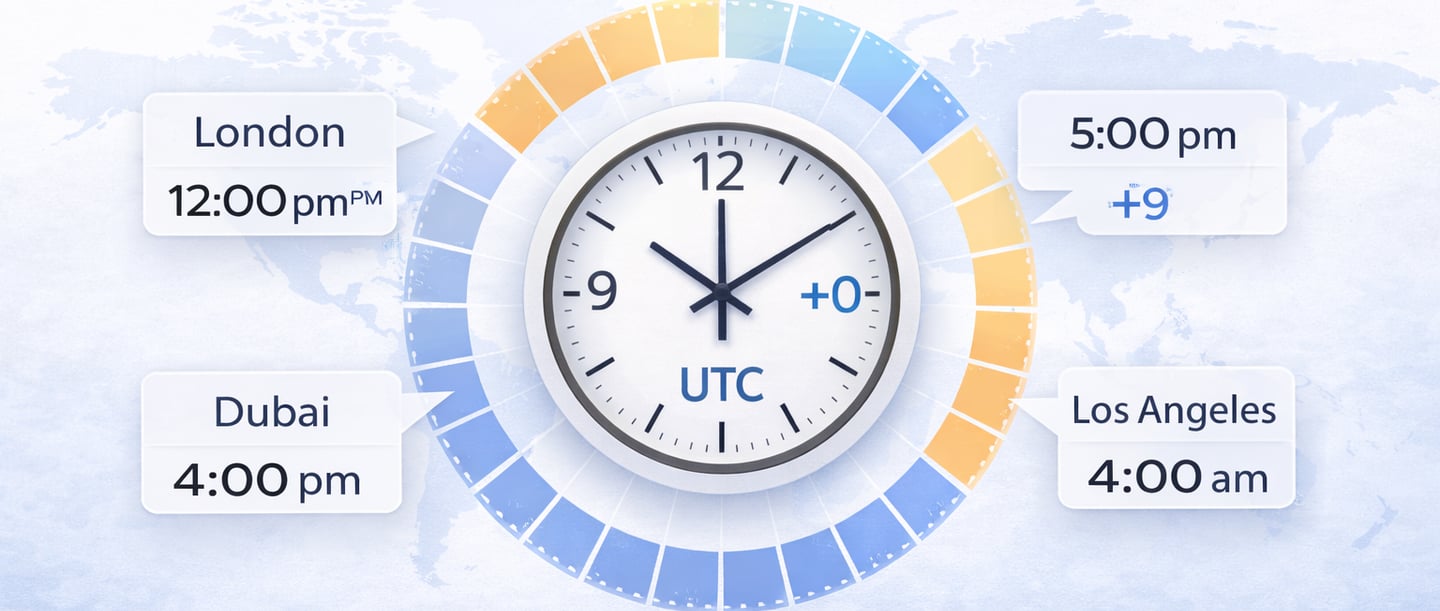
See how different UTC time zones map to locations around the world and understand how local time is calculated from UTC offsets.
TIME ZONES
Rachel
4/7/20261 min read
How Time Zones Work
The Earth is divided into 24 primary time zones based on longitude.
Each zone represents roughly one hour difference from UTC.
Examples:
This structure keeps time organized across the globe.
Why Time Zones Matter
Time zones allow different parts of the world to keep time that matches daylight hours.
Without them, sunrise and sunset would occur at inconvenient times.
UTC acts as the central reference point that keeps all time zones aligned.
Time Now Online
Time Now Online delivers accurate, real-time local time for cities, countries, and time zones worldwide. Compare time zones, convert time instantly, and plan meetings with ease using our fast, free tools.
About Us
Legal
© 2026. All rights reserved.
Time data is based on standard global time zone databases and updates automatically.
Places & Seasons
time & meetings