In today’s connected world, people regularly work, communicate, and collaborate across different countries. Whether you’re planning a business meeting, joining an online class, or coordinating with friends abroad, time zones can quickly become confusing.
Understanding how global time differences work can help you avoid missed calls, scheduling mistakes, and unnecessary delays.
In this guide, we explain how time zones affect international meetings and how you can schedule them more easily.
Why Time Zones Make Scheduling Difficult
The Earth is divided into multiple time zones so that local time matches the position of the sun. While this system helps daily life run smoothly in each region, it creates challenges when people from different parts of the world try to coordinate schedules.
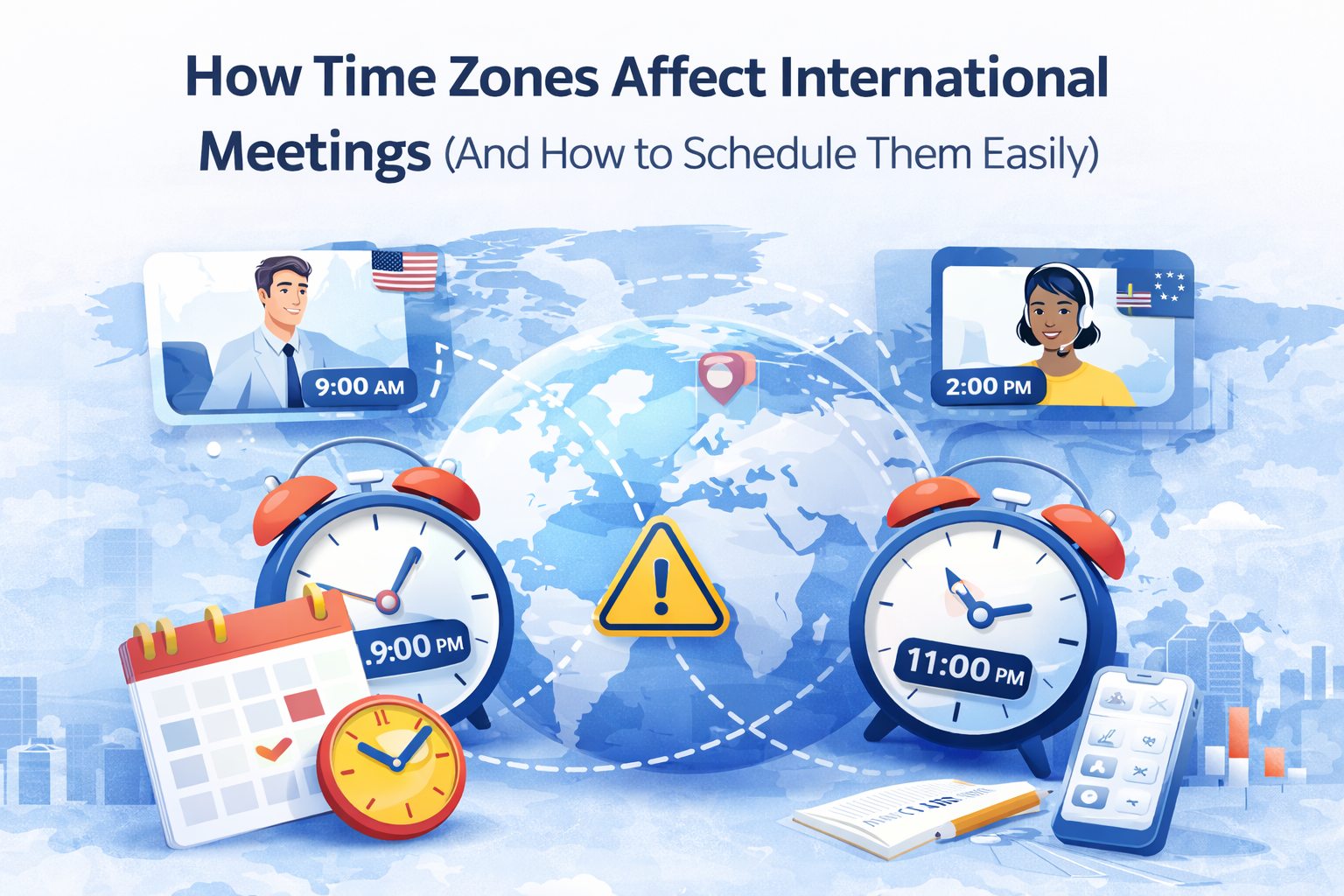
For example, when it is 9:00 AM in New York, it may already be 2:00 PM in London and 11:00 PM in Sydney. Without checking the correct time difference, scheduling a meeting can easily lead to confusion.
This is especially common in remote work environments where teams operate across several continents.
The Challenge of Daylight Saving Time
Another factor that complicates international meetings is Daylight Saving Time (DST). Some countries adjust their clocks forward or backward during certain parts of the year, while others do not.
Because different countries change their clocks on different dates, the time difference between two locations can temporarily shift for several weeks.
For example, a meeting that normally happens at the same time each week may suddenly appear one hour earlier or later for some participants.
How to Schedule Meetings Across Time Zones
Fortunately, there are simple ways to avoid scheduling problems when working across time zones.
First, always confirm the local time for each location involved in the meeting. This ensures everyone understands exactly when the meeting will occur in their region.
Second, try to schedule meetings during overlapping working hours. This helps avoid situations where one person must join very early in the morning or late at night.
Finally, using a reliable world clock or time-checking website can help you quickly compare times across different cities and countries.
Why Checking Accurate Local Time Matters
Even a small mistake in time conversion can cause missed appointments or delays in important conversations. This is why many professionals rely on accurate online time tools when planning international meetings.
With a reliable time website, you can instantly check the current time in cities and countries around the world. This makes scheduling easier and helps ensure everyone joins the meeting at the correct time.
Final Thoughts
As global communication becomes more common, understanding time zones is more important than ever. Whether you’re organizing a business meeting or coordinating with friends overseas, knowing the correct local time can save you from unnecessary confusion.
By checking accurate time sources and planning ahead, you can schedule international meetings smoothly and avoid common time zone mistakes.