Tag: time zones

  • What Is UTC Time? Meaning, Difference, and How to Convert It

    What Is UTC Time? Meaning, Difference, and How to Convert It

    If you’ve ever searched “what is UTC time” or seen time listed as UTC on your phone or flight ticket, you’re not alone.

    UTC, or Coordinated Universal Time, is the global standard used to keep time consistent across the world. Whether you’re scheduling meetings, traveling, or working online, understanding UTC can help you avoid confusion and costly mistakes.

    In this guide, you’ll learn what UTC time is, how it works, and how to convert it instantly using simple tools.


    What Is UTC Time?

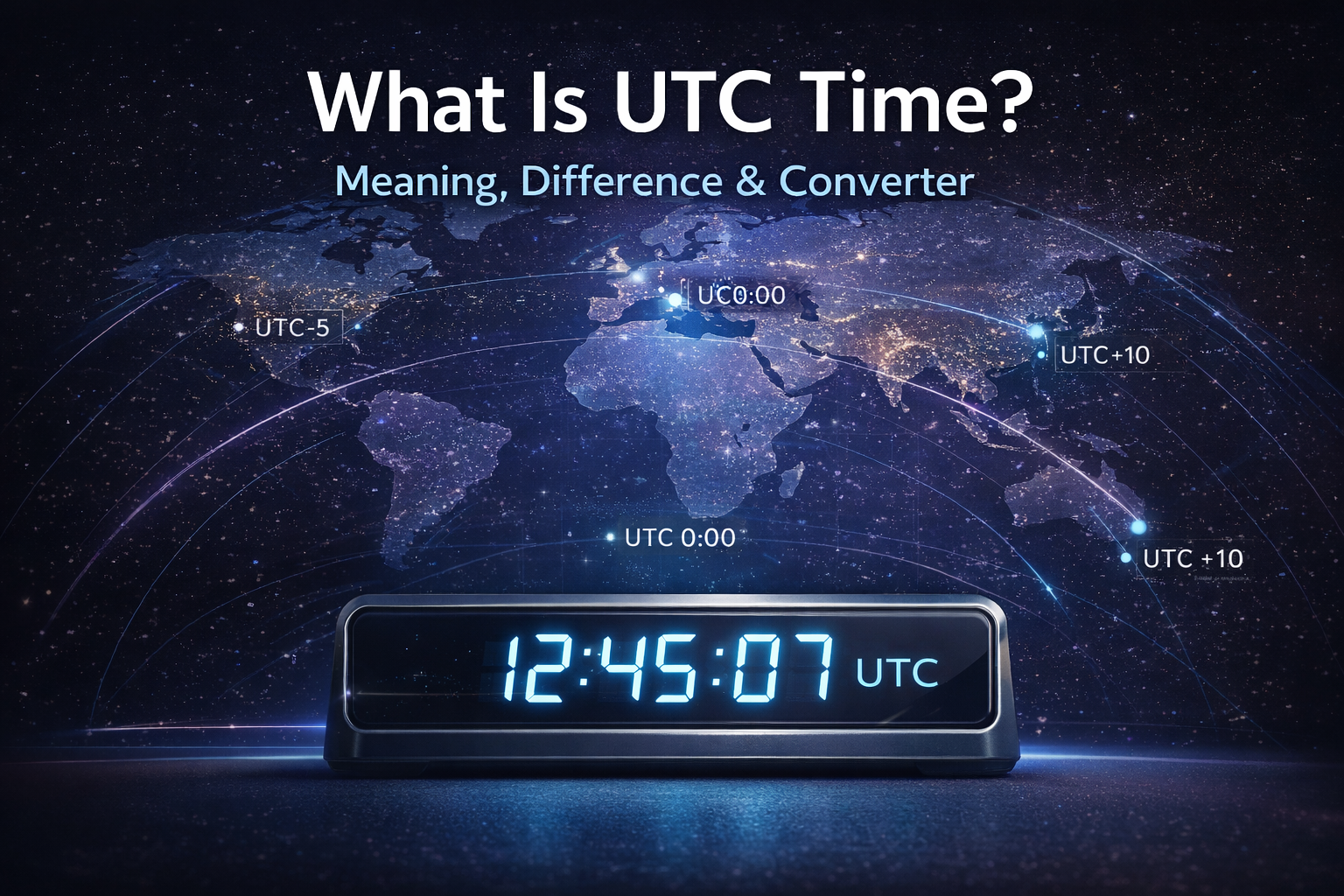
    UTC (Coordinated Universal Time) is the primary time standard used worldwide. It does not change with daylight saving time and serves as the reference point for all time zones.

    Every country’s local time is calculated as an offset from UTC.

    For example:

    • Sydney = UTC +10 (or +11 during daylight saving)
    • New York = UTC -5 (or -4 during daylight saving)

    👉 This means UTC is the “base clock” of the world.


    Why UTC Time Is Important

    UTC is used globally because it keeps everything synchronized.

    It is commonly used in:

    • Aviation (flight schedules)
    • Technology and servers
    • International business
    • Scientific research

    Without UTC, coordinating across time zones would be chaotic.


    UTC vs GMT: What’s the Difference?

    Many people confuse UTC with GMT (Greenwich Mean Time), but they are slightly different.

    • UTC = precise atomic time standard
    • GMT = based on Earth’s rotation

    In everyday use, they are often treated the same — but UTC is the modern standard.


    How to Convert UTC Time

    Converting UTC is simple once you understand offsets.

    Example:

    Instead of calculating manually, you can use a tool:

    👉 Use the Time Converter here:
    https://timenowonline.com/time-converter/

    👉 Compare cities instantly:
    https://timenowonline.com/time-difference-between-cities/


    What Time Is UTC Right Now?

    If you need the exact current UTC time, you can check it instantly:

    👉 View live UTC time:
    https://timenowonline.com/

    (This updates in real time so you always get the correct value.)


    Common UTC Questions

    Does UTC change with daylight saving?

    No. UTC stays the same all year.


    Why do airlines use UTC?

    Because it avoids confusion between countries and time zones.


    Is UTC the same everywhere?

    Yes. UTC is universal — local time zones are just offsets.


    What does UTC stand for?

    Coordinated Universal Time.


    When Should You Use UTC?

    You should use UTC when:

    • Scheduling across countries
    • Working remotely with global teams
    • Booking flights
    • Running online systems or servers

    Final Thoughts

    UTC time might seem confusing at first, but it’s actually a simple and powerful system that keeps the world connected.

    Once you understand it, converting time zones becomes easy — especially with the right tools.

    👉 Try these tools to make it effortless:

  • Best Time to Call Internationally: A Simple Guide for Global Communication (2026)

    Best Time to Call Internationally: A Simple Guide for Global Communication (2026)

    In today’s connected world, working and communicating across different countries is more common than ever. Whether you’re managing a remote team, speaking with clients overseas, or connecting with family, knowing the best time to call internationally can save you from awkward timing and missed opportunities.

    This guide will help you understand how to schedule calls efficiently across time zones.


    Why Time Zones Matter

    Every country operates within a specific time zone, and some even observe daylight saving time. This means that the time difference between two locations can change throughout the year.

    For example:

    Without checking the correct time, you might end up calling someone in the middle of the night.


    The Best Time Window for International Calls

    A good rule of thumb is to find overlapping working hours.

    Ideal overlap:

    • 8:00 AM – 10:00 AM (your time)
    • 4:00 PM – 6:00 PM (their time)

    This ensures:

    • Both parties are awake and alert
    • You avoid very early or very late calls

    Example: Australia Calling the USA

    If you’re in Sydney and need to call someone in New York:

    • Sydney morning = New York afternoon (previous day)
    • Best time:
      • Sydney: 7:00 AM – 9:00 AM
      • New York: 3:00 PM – 5:00 PM (previous day)

    This overlap is commonly used by global teams.


    Best Time for Business Calls

    For professional communication, timing is even more important.

    Tips:

    • Avoid weekends unless necessary
    • Stay within business hours (9 AM – 6 PM local time)
    • Confirm time zones before scheduling meetings

    Use Tools to Avoid Mistakes

    Instead of guessing, use tools like:

    These tools help you instantly compare multiple time zones and avoid confusion.


    Common Mistakes to Avoid

    • Forgetting daylight saving time changes
    • Assuming all countries follow the same schedule
    • Mixing up AM and PM
    • Not double-checking the date difference

    Final Thoughts

    Scheduling international calls doesn’t have to be complicated. By understanding time zones and using simple tools, you can communicate smoothly across the world.

    If you regularly work with people in different countries, building the habit of checking time differences will save you time and improve your productivity.

  • How UTC Controls Global Time Zones

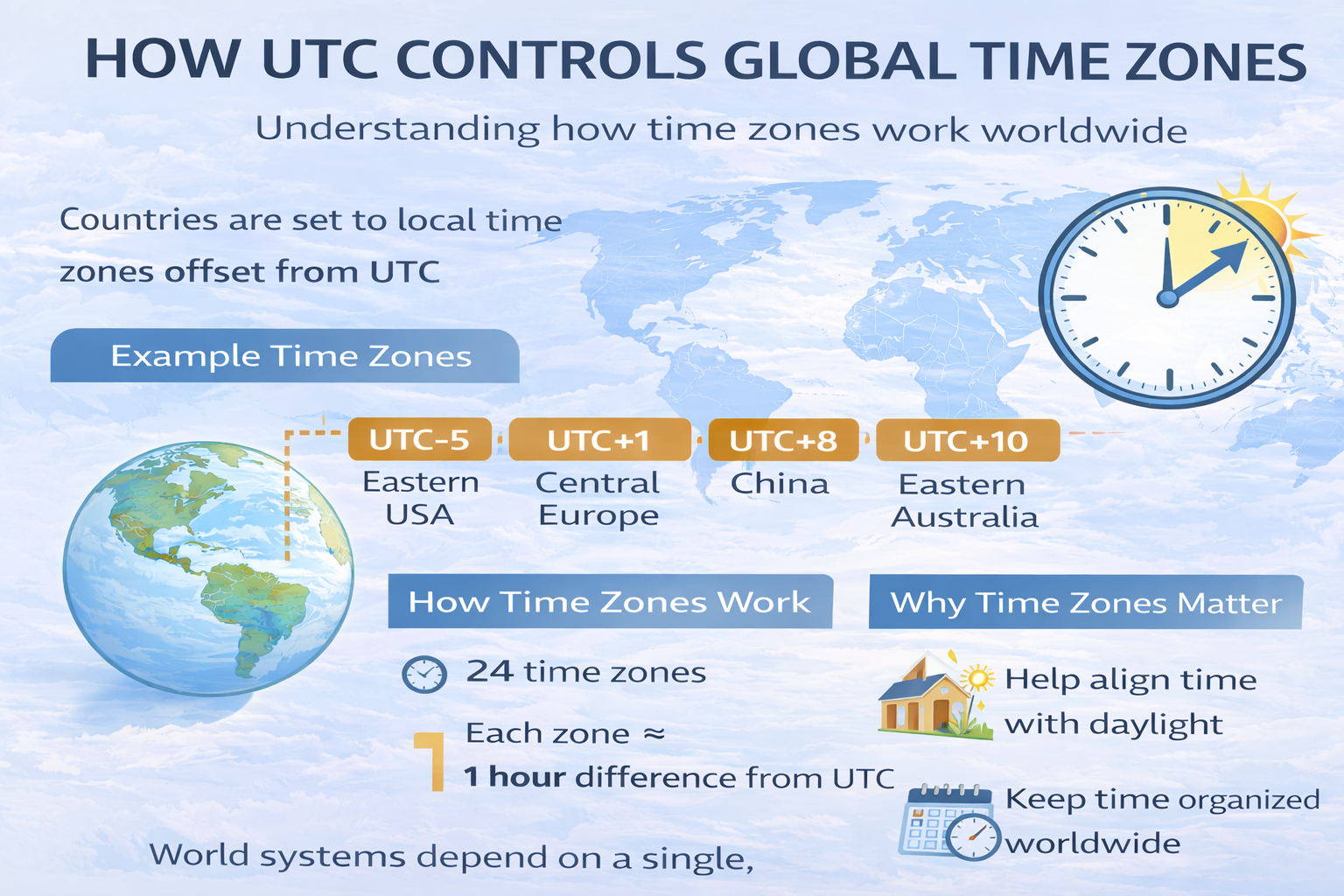
    How UTC Controls Global Time Zones

    How Time Zones Work

    The Earth is divided into 24 primary time zones based on longitude.

    Each zone represents roughly one hour difference from UTC.

    Examples:

    Time ZoneLocation
    UTC−5Eastern United States
    UTC+1Central
    UTC+8China
    UTC+10Eastern Australia

    This structure keeps time organized across the globe.

    Why Time Zones Matter

    Time zones allow different parts of the world to keep time that matches daylight hours.

    Without them, sunrise and sunset would occur at inconvenient times.

    UTC acts as the central reference point that keeps all time zones aligned.

  • Why the World Uses UTC

    Why the World Uses UTC

    The Need for a Universal Time System

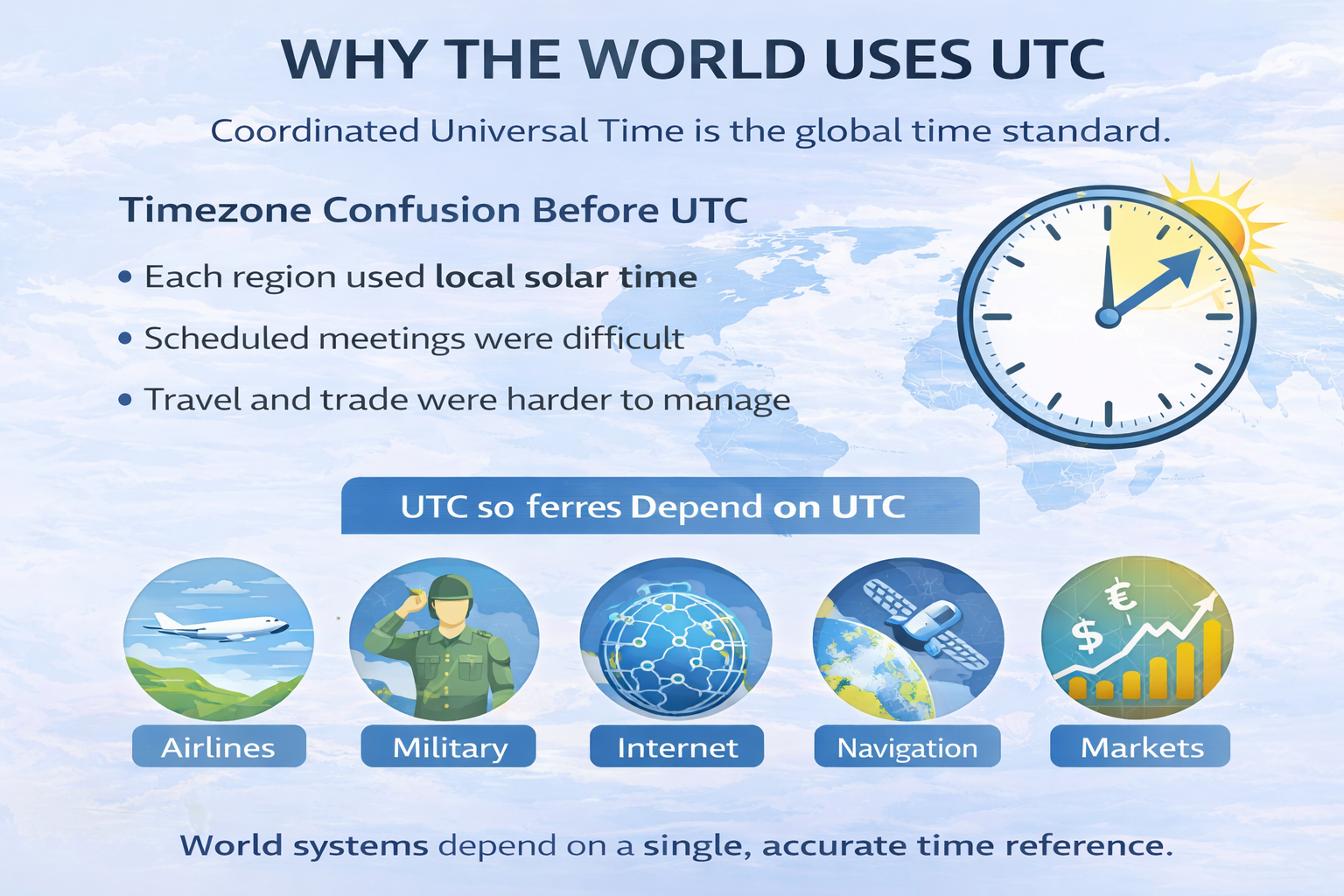
    Before a standardized system existed, every region used local solar time, which caused confusion when railways and international travel developed.

    To solve this problem, the world adopted a universal time reference.

    Today, that system is Coordinated Universal Time.

    Why UTC Is Used Worldwide

    UTC allows global systems to operate smoothly.

    It is used by:

    • airlines
    • military operations
    • satellite navigation
    • internet servers
    • global financial markets

    By using UTC as a reference point, countries can coordinate schedules and communication across time zones.

  • UTC vs GMT: What’s the Difference?

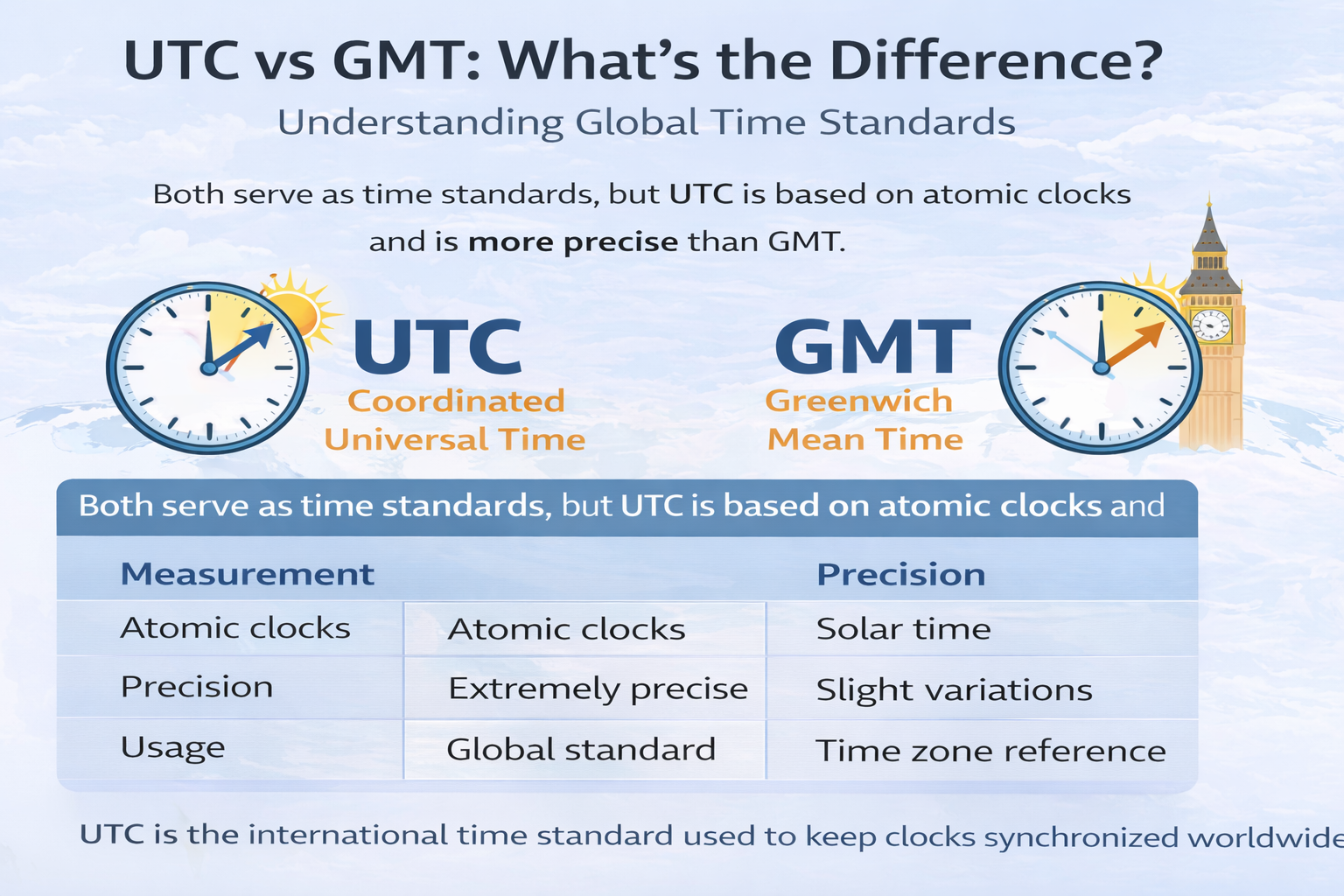
    UTC vs GMT: What’s the Difference?

    UTC vs GMT

    Many people believe UTC and GMT are exactly the same, but there are important differences.

    GMT

    Greenwich Mean Time is based on the Earth’s rotation and the position of the sun over Greenwich, England.

    UTC

    Coordinated Universal Time is based on atomic clocks, making it far more precise.

    Key Differences

    FeatureUTCGMT
    MeasurementAtomic clocksSolar time
    PrecisionExtremely preciseSlight variations
    UsageGlobal standardTime zone reference

    Despite these differences, many countries still use GMT terminology when referring to their time zone.

  • What Is UTC Time? A Simple Guide to the World’s Time Standard

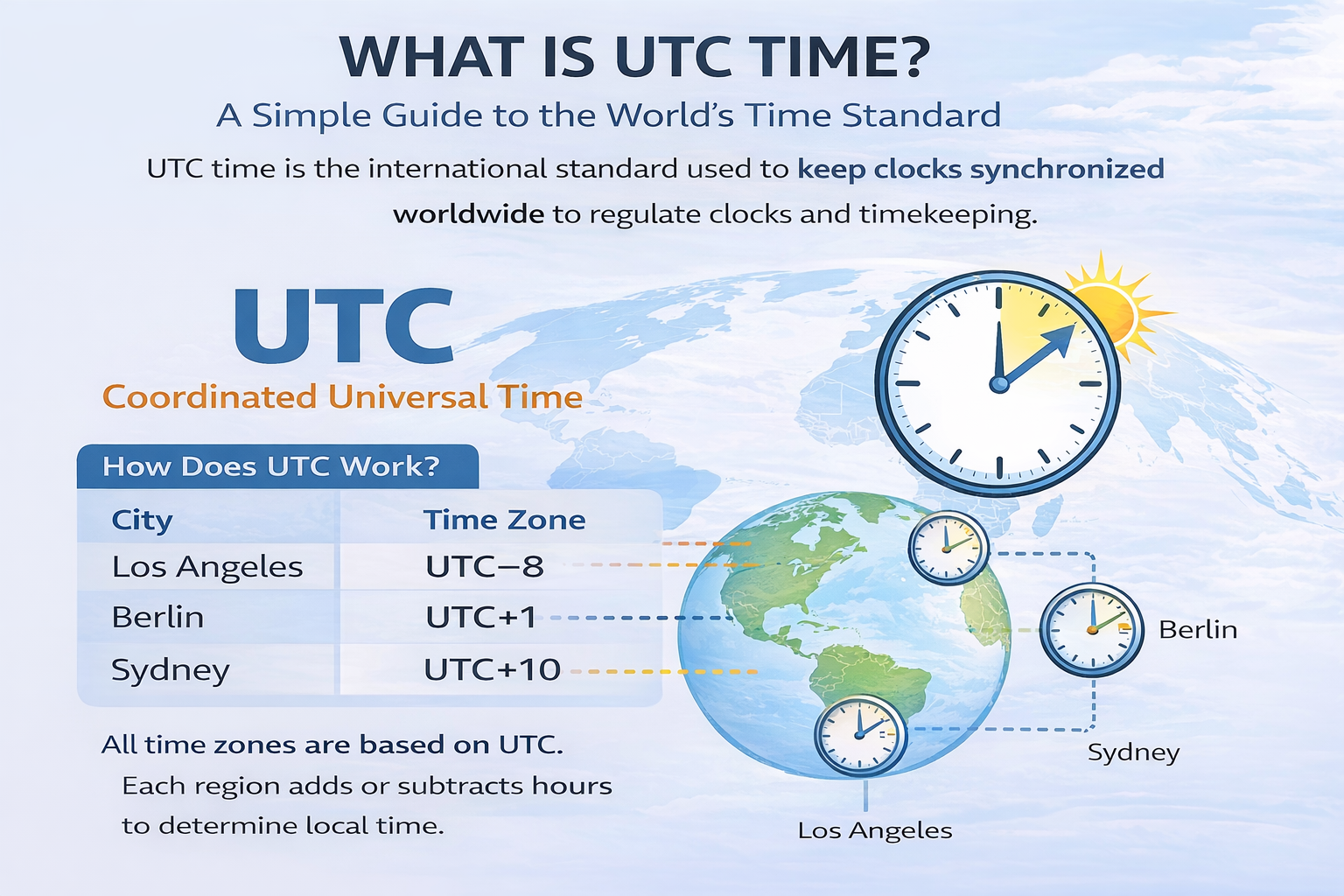
    What Is UTC Time? A Simple Guide to the World’s Time Standard

    What Is UTC Time?

    UTC time is the international standard used to keep clocks synchronized around the world.

    All time zones are based on UTC. Each region adds or subtracts hours to determine local time.

    Examples:

    CityTime Zone
    Los AngelesUTC−8
    BerlinUTC+1
    SydneyUTC+10

    UTC itself does not change for daylight saving time.

    This makes it a stable reference for global coordination.

    Why UTC Replaced GMT

    Before UTC, the world used Greenwich Mean Time (GMT).

    GMT was based on the position of the sun over the Royal Observatory in Greenwich, England.

    However, modern timekeeping requires more precise measurement, which is why UTC replaced GMT as the official global standard.

  • Are We the Only Country That Uses Daylight Saving Time?

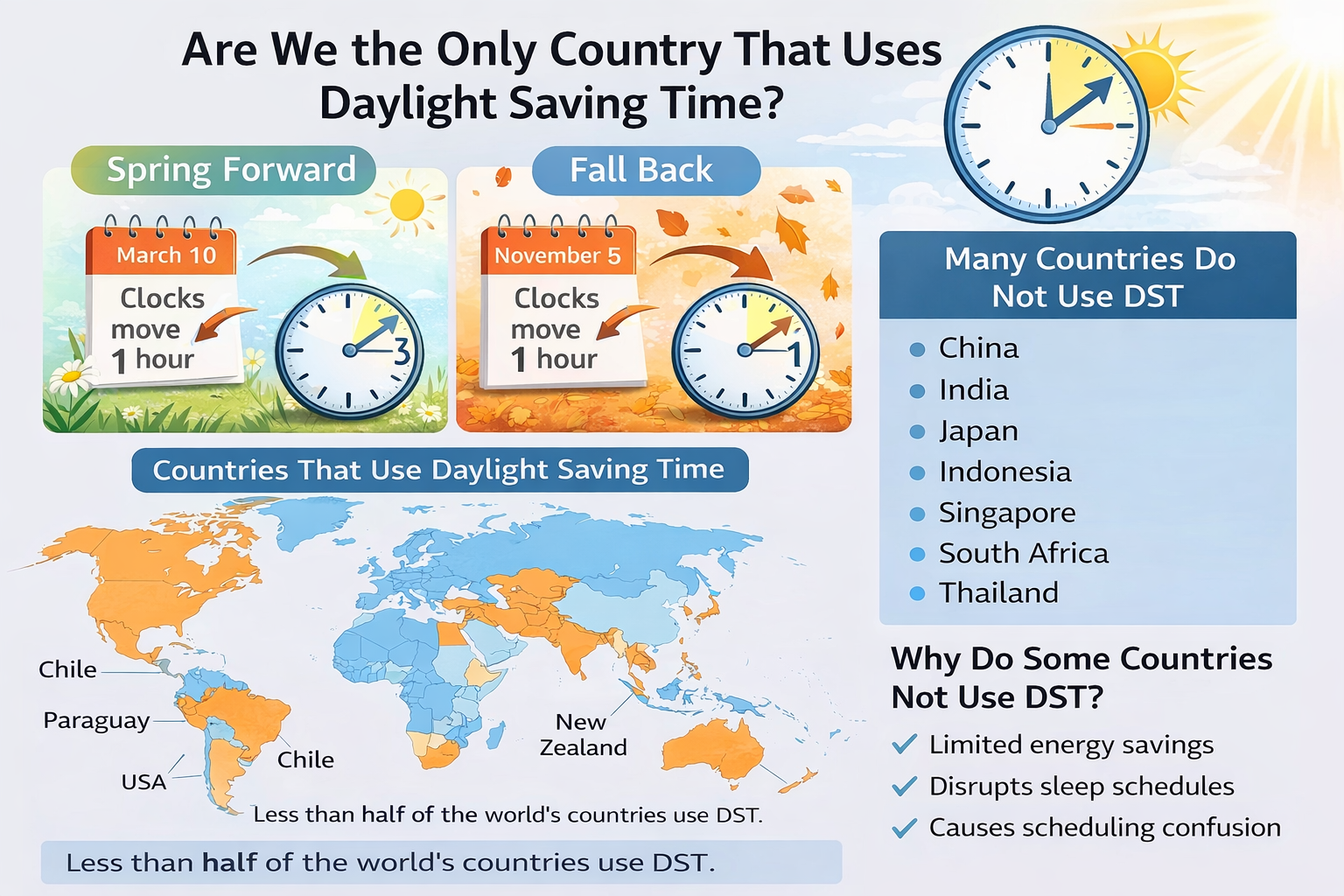
    Are We the Only Country That Uses Daylight Saving Time?

    Many people wonder whether their country is the only one that changes clocks during the year. When the time suddenly moves forward or backward, it can feel like a strange system that only a few places follow.

    In reality, many countries around the world use daylight saving time, but most countries actually do not.

    Understanding how daylight saving time works globally can help explain why some countries adopt it while others decide not to.


    What Is Daylight Saving Time?

    Daylight Saving Time (DST) is when clocks are adjusted during part of the year to make better use of daylight.

    Typically the system works like this:

    SeasonClock Change
    SpringClocks move forward by 1 hour
    Autumn / FallClocks move back by 1 hour

    Moving clocks forward allows evenings to stay brighter for longer, giving people more daylight after work or school.


    Which Countries Use Daylight Saving Time?

    Daylight saving time is used in several parts of the world.

    North America

    Some countries in North America use DST, including:

    Most areas follow a similar schedule, adjusting clocks in spring and autumn.


    Europe

    Many European countries change clocks at the same time each year.

    These countries follow Central European Summer Time, which applies across much of Europe.

    Examples include:

    The clock change typically occurs in March and October.


    Other Regions

    Some countries in other regions also use daylight saving time during certain parts of the year.

    Examples include:

    However, the number of countries using DST has slowly decreased over time.


    Why Many Countries Do Not Use Daylight Saving Time

    Most countries in the world do not change their clocks.

    Examples include:

    Many of these countries are located near the equator, where the difference between summer and winter daylight hours is small. Because sunrise and sunset times stay relatively consistent throughout the year, adjusting clocks provides little benefit.


    Why Some Countries Stopped Using DST

    Several countries that once used daylight saving time have decided to stop.

    Common reasons include:

    Limited energy savings

    Early studies suggested DST would reduce electricity use, but modern research shows the savings are often small.

    Health concerns

    Changing clocks can disrupt sleep patterns and daily routines.

    Scheduling confusion

    The time change can complicate international travel, business meetings, and technology systems.

    Because of these concerns, some governments have considered removing DST entirely.


    How Many Countries Actually Use Daylight Saving Time?

    Globally, less than half of the world’s countries use daylight saving time.

    DST is mainly used in:

    Most countries prefer to keep the same time all year.


    How Global Time Is Organized

    Modern timekeeping is based on Coordinated Universal Time (UTC).

    UTC acts as the global reference point from which all time zones are calculated.

    Each country chooses its local time zone relative to UTC based on geography, politics, and economic considerations.

    Daylight saving time is simply an additional seasonal adjustment used by some countries.


    Check the Current Time Anywhere in the World

    If you want to see the current time in cities and countries worldwide, you can use timenowonline.com to quickly check:

    This can help with travel planning, remote work, and international communication.


    Final Thoughts

    Your country is not the only place that uses daylight saving time, but many countries do not use it either. The system is mainly used in regions where daylight hours change significantly between seasons.

    While daylight saving time continues to be debated around the world, it remains an important part of timekeeping in several countries.

    Understanding how different nations manage their clocks can make global communication and travel much easier.

  • Best Time to Call Different Countries Around the World (2026 Guide)

    Best Time to Call Different Countries Around the World (2026 Guide)

    In a connected world where people work, travel, and communicate across continents, knowing the best time to call someone in another country is more important than ever. Because of time zones, calling someone at the wrong hour can easily wake them up or interrupt their workday.

    Understanding global time differences can help businesses, remote workers, and travelers communicate more effectively. In this guide, we’ll explain how to determine the best time to call different countries and how time zones affect global communication.


    Why Time Zones Matter When Calling Internationally

    The Earth is divided into multiple time zones to reflect the rotation of the planet. When it is morning in one part of the world, it may already be evening in another.

    For example:

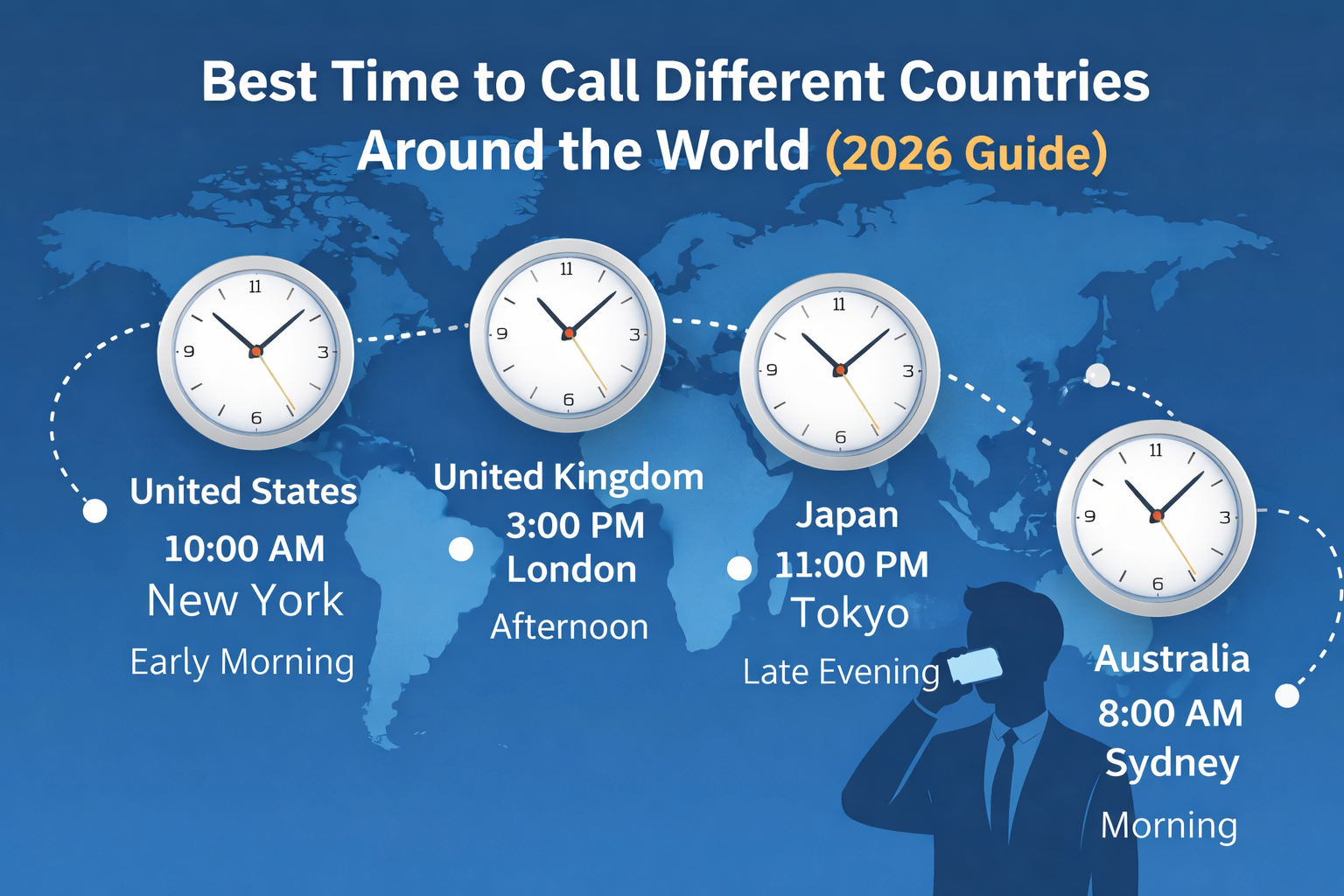
    • When it is 9:00 AM in London, it is 4:00 PM in Tokyo
    • When it is 10:00 AM in New York, it is 11:00 PM in Sydney
    • When it is 2:00 PM in Dubai, it is 7:00 PM in Singapore

    Because of these differences, choosing the right time to call someone internationally requires understanding both time zones and local working hours.


    Typical Business Hours Around the World

    Most countries follow similar business hours, typically between 9:00 AM and 5:00 PM local time. However, these hours can vary slightly depending on culture and industry.

    Common global working hours include:

    North America

    • 9:00 AM – 5:00 PM

    Europe

    • 9:00 AM – 5:30 PM

    Asia

    • 9:00 AM – 6:00 PM

    Middle East

    • 8:00 AM – 4:00 PM

    If you’re calling someone for business purposes, it is usually best to schedule your call during these hours.


    Best Time to Call Major Regions

    Calling Europe

    If you are calling Europe from other parts of the world:

    Best times:

    Example:
    When it is 8:00 AM in New York, it is 1:00 PM in London, making it a good time to call.


    Calling North America

    Best times:

    Example:
    When it is 3:00 PM in London, it is 10:00 AM in New York.


    Calling Asia

    Best times:

    Example:
    When it is 9:00 AM in London, it is 5:00 PM in Singapore.


    Calling Australia

    Australia’s time zone is significantly ahead of most of the world.

    Best times:

    Example:
    When it is 4:00 PM in Los Angeles, it is 9:00 AM in Sydney the next day.


    Tips for Scheduling International Calls

    Here are a few helpful tips to avoid calling someone at the wrong time.

    Check the Local Time First

    Before placing a call, check the current local time in the country you are contacting.

    Consider Weekends

    Some countries have different weekend schedules. For example:

    • Middle Eastern countries may observe Friday–Saturday weekends.

    Use Time Zone Tools

    Online tools and global clock websites help you instantly see the time in different locations.

    Websites like TimeNowOnline allow you to quickly check the current time in cities and countries worldwide.


    How Businesses Manage Global Time Differences

    International companies often coordinate meetings across multiple time zones. To make scheduling easier, many teams look for overlapping working hours.

    For example:

    Finding overlapping hours helps companies hold meetings without forcing employees to work extremely early or late.


    Why Accurate Time Information Is Important

    Accurate timekeeping is essential for:

    • International business meetings
    • Travel schedules
    • Global financial markets
    • Online events and webinars
    • Remote work coordination

    Even a small mistake in time zone calculation can lead to missed meetings or confusion.

    That’s why many people rely on global time websites to check current time and time differences instantly.


    Conclusion

    Calling someone in another country requires more than simply dialing the number. Time zones, working hours, and regional schedules all play a role in choosing the best time to connect.

    By understanding global time differences and checking local times before making a call, you can communicate more effectively across continents.

    Whether you’re coordinating business meetings, talking to family overseas, or planning travel, knowing the right time to call helps make international communication smoother.


© 2026 Time Now Online. All rights reserved.