
What Are Time Zones? A Simple Guide to How the World Tells Time
A simple guide explaining what time zones are, how they work, and why the world uses them to keep time organized across different regions.
TIME ZONES
Rachel
4/7/20262 min read
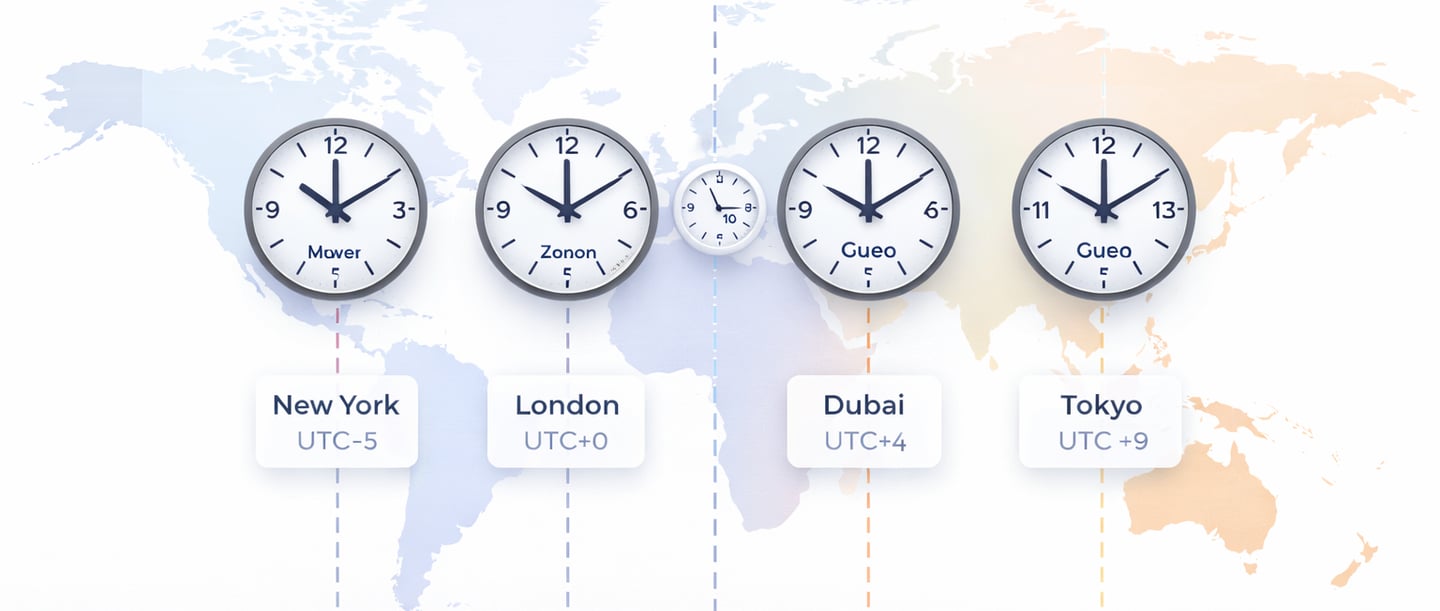
Time zones are regions of the world that share the same standard time. They were created to help organize time globally so that people living in the same area follow the same clock schedule.
Because the Earth rotates, different parts of the world experience daylight and nighttime at different moments. Time zones allow each region to set its clocks in a way that roughly matches the position of the sun in the sky.
Today, time zones make it easier to coordinate travel, communication, and international business across countries.
Why Time Zones Exist
Before time zones were introduced, cities often used local solar time, which was based on the position of the sun. This meant that each town could have a slightly different time.
As railways and global communication developed in the 19th century, having different local times became confusing and impractical.
To solve this problem, countries agreed to divide the world into standard time zones based on Coordinated Universal Time (UTC).
UTC now acts as the global reference point for measuring time.
How Time Zones Work
The Earth is divided into roughly 24 main time zones, corresponding to the 24 hours it takes for the planet to rotate once.
Each time zone is generally about 15 degrees of longitude wide.
For example:
Local time in each region is calculated by adding or subtracting hours from UTC.
Why Time Zones Are Not Perfectly Straight
In theory, time zones should follow straight lines along longitude. However, in reality they often follow political borders or economic considerations.
Countries sometimes adjust their time zones to make business and travel easier.
For example:
China uses one single time zone across the entire country.
Some countries use half-hour or 45-minute time zones.
Others change their clocks during Daylight Saving Time.
Because of these decisions, time zone boundaries can look irregular on a world map.
The Role of the International Date Line
Another important part of global timekeeping is the International Date Line.
This imaginary line runs through the Pacific Ocean and marks the place where the calendar date changes.
When crossing the International Date Line:
Traveling west adds one day
Traveling east subtracts one day
This system keeps the global calendar consistent across time zones.
Why Time Zones Matter Today
Time zones play an important role in modern life.
They help coordinate:
international travel
global business operations
worldwide communication
financial markets
Without time zones, organizing schedules across different countries would be extremely difficult.
Checking the Current Time Around the World
If you want to quickly see the current time in cities and countries worldwide, you can use timenowonline.com.
The site allows you to:
check live clocks for cities worldwide
compare time differences between locations
learn about time zones and daylight saving time
find the current local time anywhere in the world
Final Thoughts
Time zones are an essential system that helps keep the world organized. By dividing the planet into regions with standard time, they allow people across different countries to coordinate their daily activities more easily.
From travel and business to communication and technology, time zones play a key role in how the modern world functions.
Time Now Online
Time Now Online delivers accurate, real-time local time for cities, countries, and time zones worldwide. Compare time zones, convert time instantly, and plan meetings with ease using our fast, free tools.
About Us
Legal
© 2026. All rights reserved.
Time data is based on standard global time zone databases and updates automatically.
Places & Seasons
time & meetings