
What Happens If You Live on or Near the Border of Two Time Zones?
Living near a time zone border? Learn how it affects daily life, work, travel, and schedules—plus tips to avoid confusion across different time zones.
TIME ZONES
Rachel
4/17/20262 min read
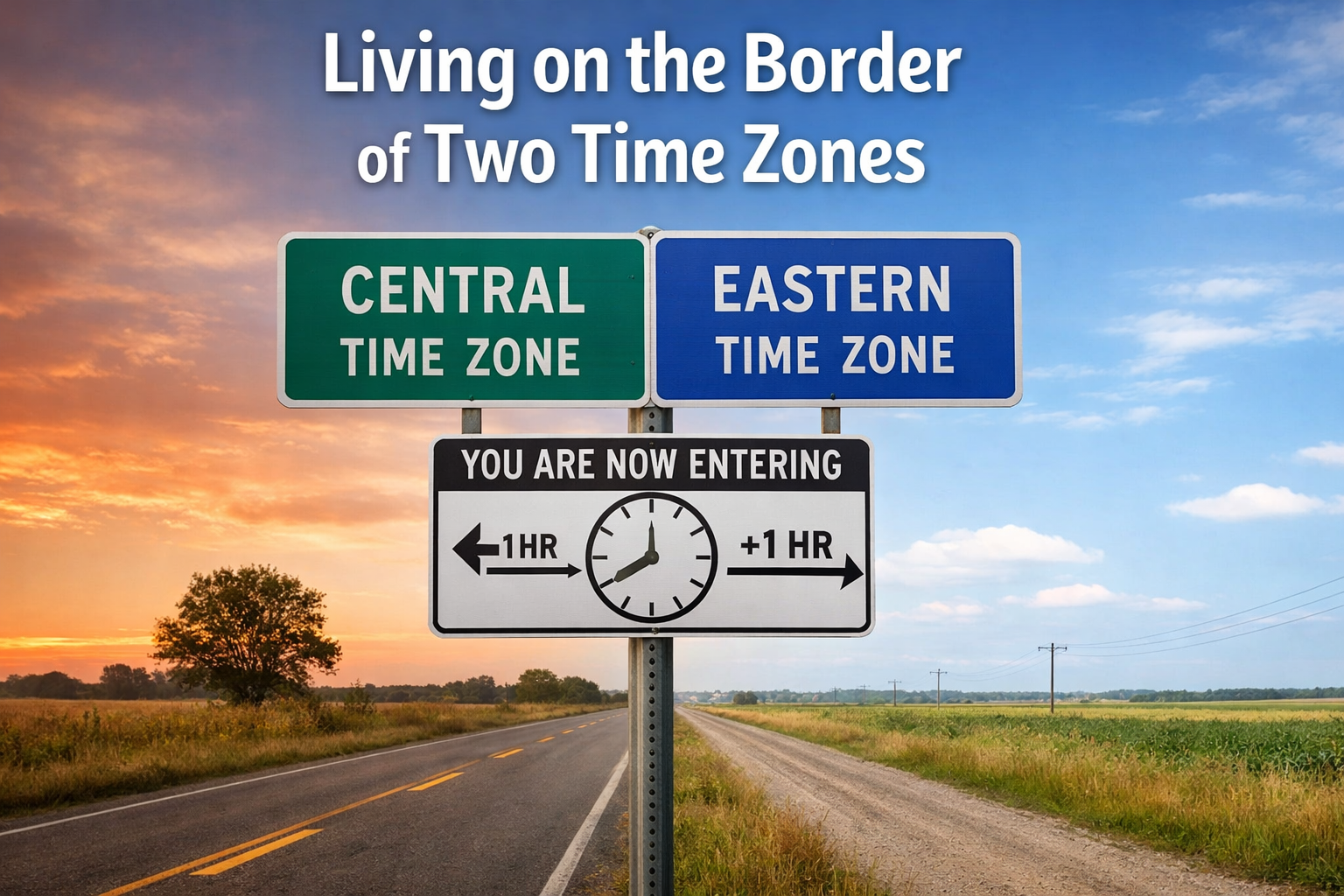
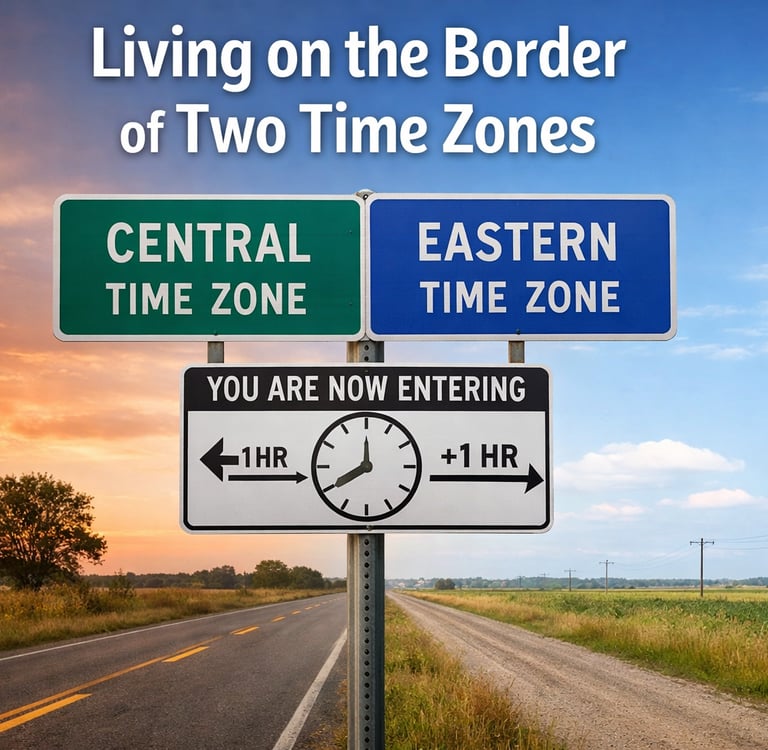
Living near a time zone border might sound confusing—but for millions of people around the world, it’s just part of daily life. From different work schedules to mismatched daylight saving rules, time zone borders can create unique challenges (and sometimes advantages).
In this guide, we’ll break down exactly what happens, how people manage it, and why it matters more than you might think.
What Is a Time Zone Border?
A time zone border is the line where one region’s official time changes to another. For example:
One side: 9:00 AM
Other side: 10:00 AM
Even though you might only be a few minutes away geographically, the clock can be an hour (or more) different.
These borders are not always straight—they often follow:
Country boundaries
State or province lines
Political decisions
Daily Life Near a Time Zone Border
Living near a time zone border affects everyday routines in surprising ways:
1. Work and Commute Differences
You might live in one time zone but work in another
Your workday could start “earlier” or “later” depending on direction
👉 Example:
Leave home at 8:30 AM → arrive at work at 9:00 AM (even if travel was only 30 minutes)
2. School and Business Hours
Schools and offices may follow different time zones
Parents and kids can have mismatched schedules
3. TV, Events, and Appointments
TV shows, meetings, and events may list times differently
You always need to double-check which time zone is being used
4. Mobile Phones and Devices
Smartphones usually auto-adjust time zones
But near borders, they can:
Switch back and forth
Show incorrect times if signal changes
Real-World Examples
🇺🇸 United States (Kansas & Missouri)
Kansas (Central Time)
Missouri (Central Time too, but nearby states differ)
Some nearby regions switch zones quickly
🇪🇸 Spain vs 🇵🇹 Portugal
Same geography, different time zones
Spain is 1 hour ahead of Portugal
🇺🇸 Arizona vs Navajo Nation
Arizona does NOT observe daylight saving
Navajo Nation DOES
👉 Result: Time changes depending on location within the same state
🇨🇳 China (Single Time Zone)
Entire country uses one time zone
Western regions experience sunrise very late
Daylight Saving Makes It More Confusing
Time zone borders get even trickier during Daylight Saving Time (DST):
One side may change clocks
The other side may stay the same
👉 Result:
Time difference can change from 1 hour → 2 hours
Happens twice a year
Advantages of Living Near a Time Zone Border
More flexibility in scheduling
Opportunity to “gain time” when traveling west
Businesses can operate across wider hours
Challenges to Watch Out For
Missed appointments due to confusion
Travel timing mistakes
Meeting scheduling issues
Delivery or transport delays
Tips for Managing Time Zone Differences
Always confirm which time zone is being used
Use digital calendars with automatic time zone support
Double-check travel and meeting times
Use tools like time converters
Why Time Zone Borders Exist
Time zones are based on:
Earth’s rotation
Political decisions
Economic alignment
Countries often adjust time zones to:
Match business partners
Simplify administration
Improve daily life schedules
Final Thoughts
Living near a time zone border can be confusing—but once you understand how it works, it becomes manageable.
In fact, it highlights how time isn’t just about geography—it’s also about how societies choose to organize their day.
FAQ
Do people near time zone borders get confused often?
Sometimes—especially with meetings and travel—but most locals adapt quickly.
Can your phone show the wrong time near a border?
Yes, if signals switch frequently between zones.
Is there ever more than a 1-hour difference?
Yes. Some borders have 30-minute or even larger differences depending on the region.
Do all countries follow daylight saving time?
No. Many countries (including most of Asia and Africa) do not use DST.
Time Now Online
Time Now Online delivers accurate, real-time local time for cities, countries, and time zones worldwide. Compare time zones, convert time instantly, and plan meetings with ease using our fast, free tools.
About Us
Legal
© 2026. All rights reserved.
Time data is based on standard global time zone databases and updates automatically.
Places & Seasons
time & meetings