
What Is Daylight Saving Time? Why Clocks Change Around the World
A quick guide to daylight saving time, explaining why clocks move forward in spring and back in autumn, and how it helps make better use of daylight.
TIME GUIDES
Rachel
4/7/20262 min read
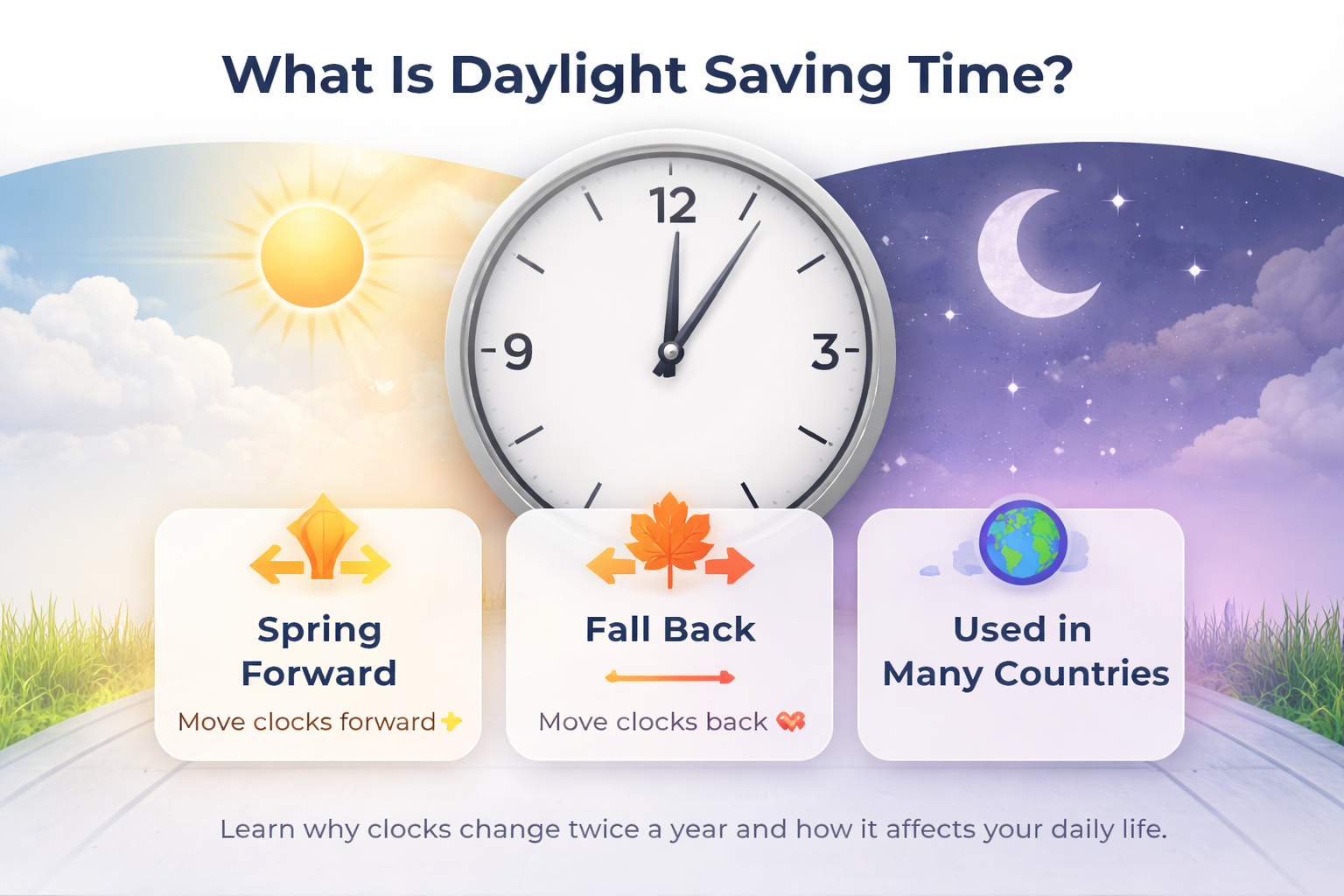
Daylight Saving Time (DST) is a system used in some countries where clocks are adjusted forward or backward during certain times of the year.
Typically, clocks are moved forward by one hour in spring and back by one hour in autumn (fall). This adjustment is intended to make better use of daylight during the longer days of the year.
The idea behind daylight saving time is simple: shifting the clock allows people to enjoy more daylight in the evening hours.
Why Daylight Saving Time Exists
Daylight saving time was introduced to make better use of natural daylight. When clocks move forward in spring, sunrise and sunset occur later in the day.
This means people have more daylight after work or school.
Historically, the system was believed to help:
reduce electricity use
increase productivity
allow more daylight activities
improve coordination of schedules
Although energy savings were once a major reason for DST, modern studies show the impact may be smaller than originally expected.
How Daylight Saving Time Works
In most countries that use DST, the schedule follows this pattern:
People often remember this using the phrase:
“Spring forward, fall back.”
For example:
If the time is 2:00 AM, the clock moves forward to 3:00 AM during the spring change.
In autumn, 2:00 AM becomes 1:00 AM when clocks move backward.
Countries That Use Daylight Saving Time
Daylight saving time is used mainly in regions where seasonal daylight varies significantly.
Countries and regions that commonly observe DST include:
many European countries
parts of Australia
some countries in South America
However, many countries around the world do not use daylight saving time.
Why Some Countries Do Not Use DST
Many countries, especially those near the equator, do not observe daylight saving time because daylight hours remain fairly consistent throughout the year.
Examples include:
For these countries, adjusting clocks provides little benefit.
How DST Affects Time Zones
Daylight saving time temporarily changes the relationship between local time and Coordinated Universal Time (UTC).
For example:
This shift can sometimes create confusion when scheduling international meetings or travel.
Common Challenges With Daylight Saving Time
Although DST has benefits, it also creates challenges.
Some common issues include:
disrupted sleep schedules
confusion with international time differences
technology and scheduling adjustments
debates about whether DST should continue
Because of these concerns, several countries have considered eliminating daylight saving time.
Checking Time During Daylight Saving Changes
When daylight saving time begins or ends, local clocks change, which can affect global time differences.
You can easily check the current local time and time zone changes using timenowonline.com, which provides accurate time information for cities and countries worldwide.
Final Thoughts
Daylight saving time is a system designed to make better use of daylight during certain months of the year. By shifting clocks forward in spring and back in autumn, some countries aim to maximize daylight hours in the evening.
While the system continues to be debated, daylight saving time remains an important part of timekeeping in several regions around the world.
Understanding how DST works can help travelers, businesses, and global teams coordinate time more effectively.
Time Now Online
Time Now Online delivers accurate, real-time local time for cities, countries, and time zones worldwide. Compare time zones, convert time instantly, and plan meetings with ease using our fast, free tools.
About Us
Legal
© 2026. All rights reserved.
Time data is based on standard global time zone databases and updates automatically.
Places & Seasons
time & meetings