
What Time Are the Most People Awake in the World?
What time are most people awake in the world? Discover the global peak hours when billions are active across time zones and why it happens.
TIME GUIDES
Rachel
4/17/20262 min read
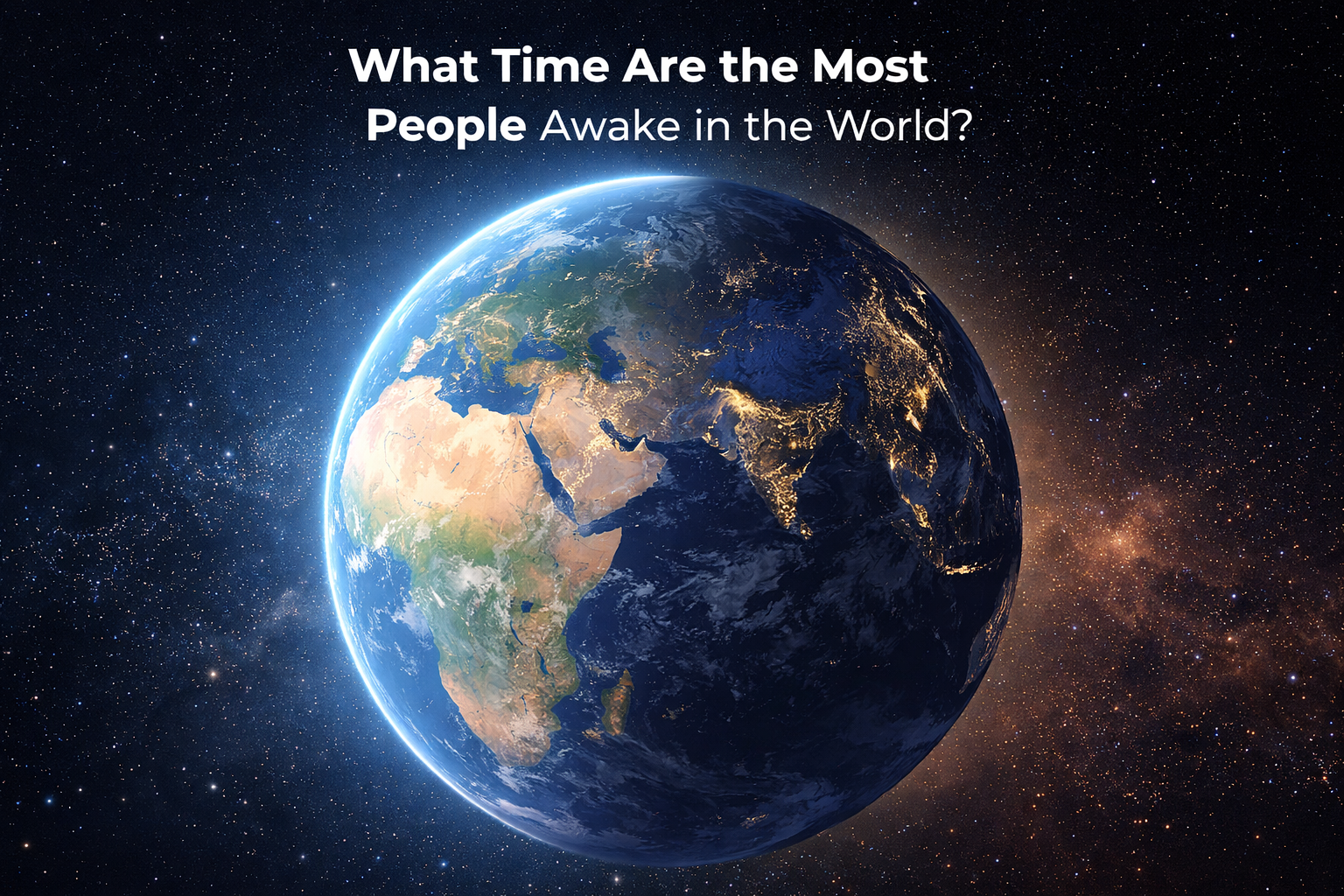
Have you ever wondered if there’s a moment when most of the world is awake at the same time?
With billions of people spread across different time zones, it might seem impossible—but surprisingly, there is a window when global activity peaks.
In this guide, we’ll explain when that happens, why it occurs, and how time zones shape human activity across the planet.
The Short Answer
👉 The time when the most people are awake is roughly:
1:00 PM – 3:00 PM (UTC)
During this period, multiple highly populated regions of the world are awake and active at the same time.
Why This Time?
This global “peak awake time” happens because of how time zones overlap across continents.
Let’s break it down:
Europe
Time: Afternoon (1 PM – 4 PM)
Status: Fully awake (work, school, daily life)
Asia (Including China & India)
Time: Evening (6 PM – 10 PM)
Status: Still very active (commuting, dinner, entertainment)
Middle East & Africa
Time: Afternoon to evening
Status: Active
Americas
Time: Early morning (6 AM – 9 AM)
Status: People starting their day
👉 When you combine all these regions, you get the highest number of people awake at once.
What About Night Time?
At any given moment:
Roughly half the world is in daylight
The other half is in darkness
But not everyone sleeps at night at the same time.
Even during “night”:
Some people are working (night shifts)
Others are still awake late
Cities never fully sleep
Why Population Matters
The key reason this peak happens is population concentration:
Asia holds over 50% of the world’s population
Europe adds hundreds of millions more
Africa and the Middle East contribute significantly
👉 When Asia and Europe are both awake, you already have a majority of humanity active.
Does This Change During the Year?
Not significantly—but there are small shifts due to:
Daylight Saving Time (DST)
Some countries adjust clocks
This slightly shifts overlap times
Seasonal Differences
Daylight hours change
Sleep patterns may vary slightly
👉 But overall, the 1 PM – 3 PM UTC window stays the global peak
Is There a Time When Everyone Is Awake?
No — there is never a moment when everyone on Earth is awake
Why?
The Earth is round 🌍
Time zones divide day and night
People follow different schedules
👉 There will always be large regions asleep while others are awake.
Why This Matters
Understanding global awake times is useful for:
International Communication
Best time to call or schedule meetings
Avoid waking people up
Online Businesses
Launch products at peak activity times
Maximize global engagement
Content & Website Traffic
Publish content when more people are online
Great for sites like timenowonline.com
Real-World Example
At 2 PM UTC:
🇬🇧 London → 2 PM
🇩🇪 Berlin → 3 PM
🇮🇳 India → 7:30 PM
🇨🇳 China → 10 PM
🇦🇺 Sydney → Midnight
🇺🇸 New York → 9 AM
👉 This overlap creates a powerful global activity window.
Final Thoughts
While the world never operates on a single schedule, there is a time when human activity peaks across continents.
👉 1 PM – 3 PM UTC is when the world is most awake
It’s the moment when:
Europe is working
Asia is still active
The Americas are waking up
This natural overlap makes it the busiest time on Earth.
FAQ
What time is the world most active?
Around 1 PM to 3 PM UTC, when multiple continents are awake.
Why isn’t it the same time everywhere?
Because Earth is divided into time zones based on rotation and geography.
Does this change with daylight saving time?
Slightly, but the peak window remains mostly the same.
Is there a best time to post content globally?
Yes—posting during this peak window can help reach a wider audience.
Time Now Online
Time Now Online delivers accurate, real-time local time for cities, countries, and time zones worldwide. Compare time zones, convert time instantly, and plan meetings with ease using our fast, free tools.
About Us
Legal
© 2026. All rights reserved.
Time data is based on standard global time zone databases and updates automatically.
Places & Seasons
time & meetings