
Why Do Some Countries Change Clocks for Daylight Saving Time? (2026 Guide)
Learn why some countries use Daylight Saving Time, how it works, and why many places choose not to follow it.
Rachel
4/7/20262 min read
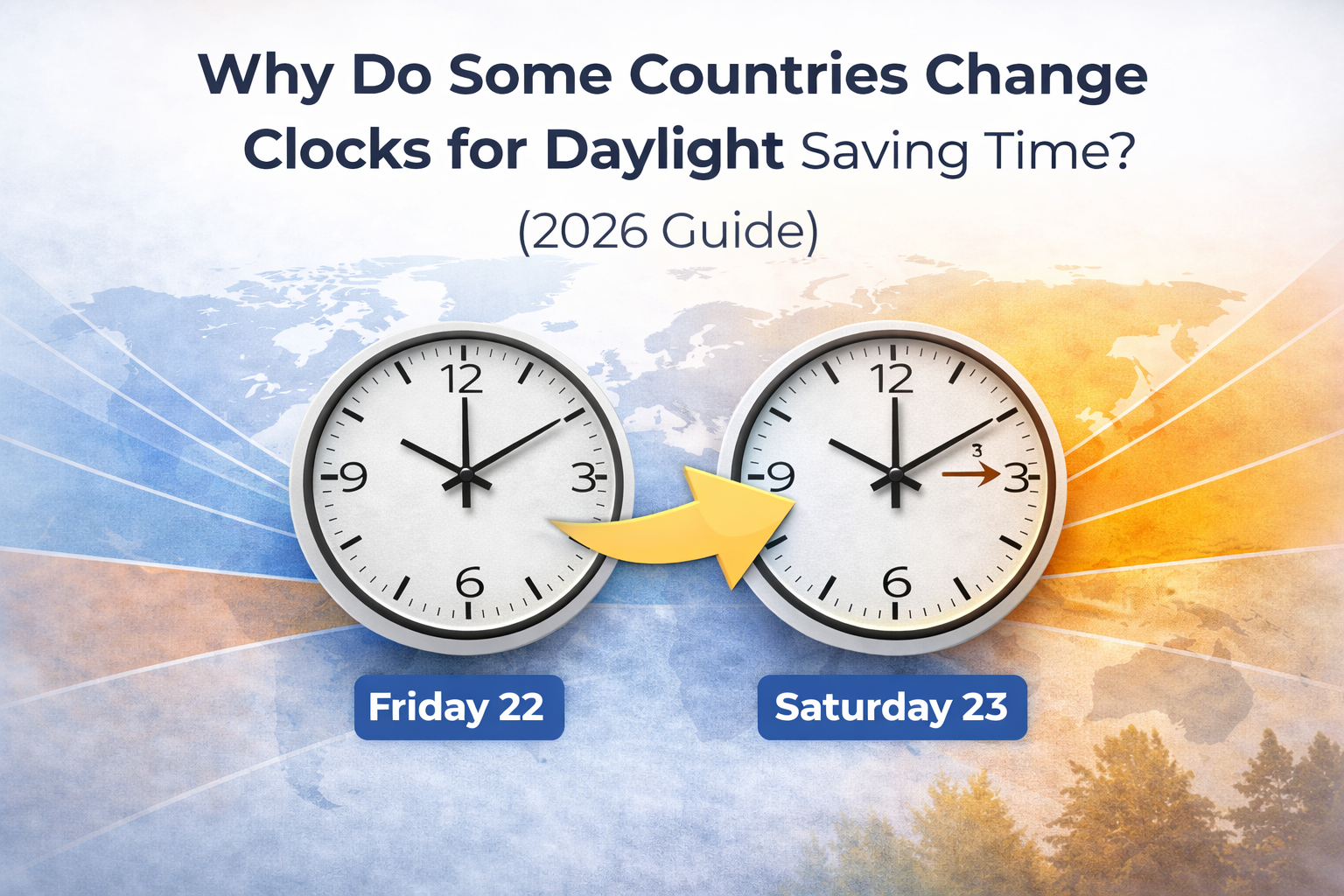
Twice a year, millions of people adjust their clocks forward or backward because of Daylight Saving Time (DST). While some countries follow this system regularly, others choose not to change their clocks at all.
Daylight Saving Time can be confusing, especially when coordinating international meetings, travel schedules, or global business operations.
In this guide, we’ll explain why some countries change their clocks, how the system works, and why not all nations follow it.
What Is Daylight Saving Time?
Daylight Saving Time is the practice of moving clocks forward by one hour during warmer months to extend evening daylight.
When DST begins:
Clocks move forward one hour (often called “spring forward”).
When DST ends:
Clocks move back one hour (“fall back”).
The goal is to make better use of natural daylight and reduce the need for artificial lighting.
Why Daylight Saving Time Was Introduced
The idea of adjusting clocks to use daylight more efficiently dates back several centuries.
However, DST became widely adopted during the early 20th century, particularly during World War I and World War II.
Governments believed that shifting clocks could help:
Save electricity
Reduce fuel consumption
Increase productivity during daylight hours
Although the original purpose was energy conservation, the effectiveness of DST is still debated today.
Countries That Use Daylight Saving Time
Several regions continue to use Daylight Saving Time each year.
These include:
However, even within these countries, some areas may choose not to follow DST.
For example:
Hawaii does not observe DST.
Arizona also remains on standard time year-round (except the Navajo Nation).
Countries That Do Not Use DST
Most countries around the world do not use Daylight Saving Time.
Many nations near the equator experience relatively consistent daylight throughout the year, so adjusting clocks provides little benefit.
Examples include:
Because daylight hours remain fairly stable, changing the clock is unnecessary.
Why Some Countries Are Ending DST
In recent years, several governments have debated removing Daylight Saving Time.
Critics argue that DST can cause problems such as:
Sleep disruption
Increased fatigue
Temporary productivity loss
Confusion with international scheduling
Some countries are considering permanent standard time or permanent daylight time instead.
How DST Affects Global Time Differences
Daylight Saving Time can temporarily change time differences between countries.
For example:
If the United States switches to DST before Europe does, the time difference between the two regions may shift for a short period.
This can make scheduling international meetings more complicated. Many global organizations rely on UTC time to avoid confusion during these transitions.
Interesting Facts About Daylight Saving Time
Several interesting facts highlight how complex DST can be.
Not all countries change clocks on the same date.
Some countries have abolished DST after trying it for several years.
Regions near the equator rarely use DST because daylight hours stay consistent.
Time zone differences may temporarily change when only some countries adjust their clocks.
Final Thoughts
Daylight Saving Time remains a widely used system in parts of the world, but it is far from universal. While some countries believe the system improves energy efficiency and productivity, others find the clock changes unnecessary.
Understanding how DST works can help travellers, businesses, and remote teams avoid confusion when working across different time zones.
As global communication continues to grow, clear timekeeping systems remain essential for travel, international business, online meetings, and staying connected with people around the world. Knowing when and where Daylight Saving Time applies can save you from costly scheduling mistakes and missed appointments.
Time Now Online
Time Now Online delivers accurate, real-time local time for cities, countries, and time zones worldwide. Compare time zones, convert time instantly, and plan meetings with ease using our fast, free tools.
About Us
Legal
© 2026. All rights reserved.
Time data is based on standard global time zone databases and updates automatically.
Places & Seasons
time & meetings