
How Many Countries Have Multiple Time Zones? A Complete Guide
Learn how many countries have multiple time zones and why large nations use different time systems to manage daylight and daily life.
TIME ZONES
Rachel
4/9/20262 min read
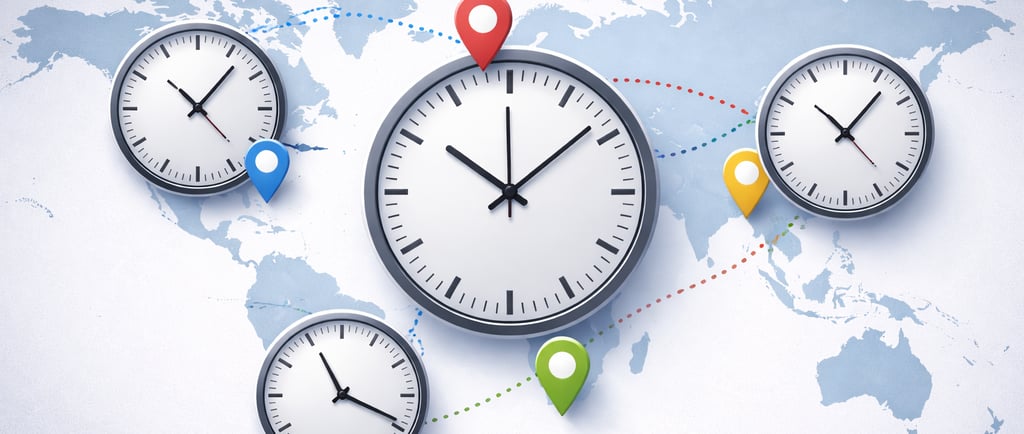
Time zones are used around the world to standardize time based on geographic regions. While many countries operate within a single time zone, others span large areas and require multiple time zones to manage time differences across regions. So, how many countries actually have more than one time zone?
As of 2026, there are around 20 to 25 countries that have multiple time zones, depending on how territories and overseas regions are counted. These countries are typically large in size or have distant territories spread across different parts of the world.
Why Do Some Countries Have Multiple Time Zones?
Countries use multiple time zones mainly due to their geographic size or spread. The Earth is divided into 24 time zones, each representing one hour of difference. When a country stretches across a wide distance from east to west, a single time zone would not accurately reflect daylight hours in all regions.
For example, when it is morning in the eastern part of a large country, it may still be night in the western region. Multiple time zones help align daily activities, business hours, and daylight more naturally.
Countries With Multiple Time Zones
Here are some well-known countries that have more than one time zone:
1. United States
The United States has six main time zones, including:
Eastern
Central
Mountain
Pacific
Alaska
Hawaii-Aleutian
This makes it one of the most complex countries in terms of timekeeping.
2. Russia
Russia has the most time zones in the world, with 11 different time zones stretching across Europe and Asia.
3. Canada
Canada uses six time zones, similar to the United States, due to its large land area.
4. Australia
Australia has three main time zones:
Western
Central
Eastern
Additionally, some states observe daylight saving time while others do not, which adds complexity.
5. Brazil
Brazil previously had multiple time zones and still maintains several, although it no longer observes daylight saving time.
6. Mexico
Mexico has four time zones, including regions that follow different daylight saving rules.
7. Indonesia
Indonesia uses three time zones across its many islands.
8. Kazakhstan
Kazakhstan spans two time zones, reflecting its large geographic area.
9. Mongolia
Mongolia operates across two time zones, though it often uses one standard time for simplicity.
10. Democratic Republic of the Congo
This country has two time zones due to its size across central Africa.
Countries With Overseas Territories
Some countries appear to have multiple time zones because of their overseas territories:
France (Europe, Caribbean, Pacific)
United Kingdom (including overseas territories)
Netherlands (Caribbean territories)
Denmark (Greenland and Faroe Islands)
When these territories are included, these countries technically span several time zones worldwide.
Countries With Only One Time Zone
Interestingly, some very large countries use only one time zone for simplicity. For example:
China uses a single time zone across the entire country
India also follows one standard time despite its size
This can sometimes lead to unusual daylight patterns in certain regions.
Why This Matters
Understanding how many time zones a country has is important for:
Planning travel
Avoiding time confusion
If you are working with international clients or communicating globally, knowing whether a country has multiple time zones can help you choose the right time to connect.
Conclusion
In 2026, approximately 20–25 countries have multiple time zones, mainly due to their size or geographic spread. Countries like Russia, the United States, and Canada lead with the highest number of time zones, while others maintain multiple zones across regions or territories.
As global communication continues to grow, tools like world clocks and time converters make it easier to manage these differences. Knowing how time zones work across countries helps you stay organized, avoid mistakes, and communicate more effectively worldwide.
Time Now Online
Time Now Online delivers accurate, real-time local time for cities, countries, and time zones worldwide. Compare time zones, convert time instantly, and plan meetings with ease using our fast, free tools.
About Us
Legal
© 2026. All rights reserved.
Time data is based on standard global time zone databases and updates automatically.
Places & Seasons
time & meetings