A man walking down a street next to a flag

Qatar Time Now

Stay updated with the current time in Qatar and plan your meetings, travel, and international calls with confidence. Qatar runs on a single time zone — Arabia Standard Time (AST) — three hours ahead of UTC, with no daylight saving time, making it one of the most stable and predictable clocks in the Middle East.

About Qatar

Qatar (officially the State of Qatar, or Dawlat Qaṭar) is a small but enormously wealthy nation on the northeastern coast of the Arabian Peninsula. The country occupies a peninsula extending into the Persian Gulf, sharing its only land border with Saudi Arabia to the south. Qatar covers approximately 11,571 square kilometres — making it slightly smaller than the US state of Connecticut — and has a population of around 3 million people, the vast majority of whom are expatriates from across Asia, the Middle East, Europe, and the Americas. Native Qataris make up only around 12% of the population.

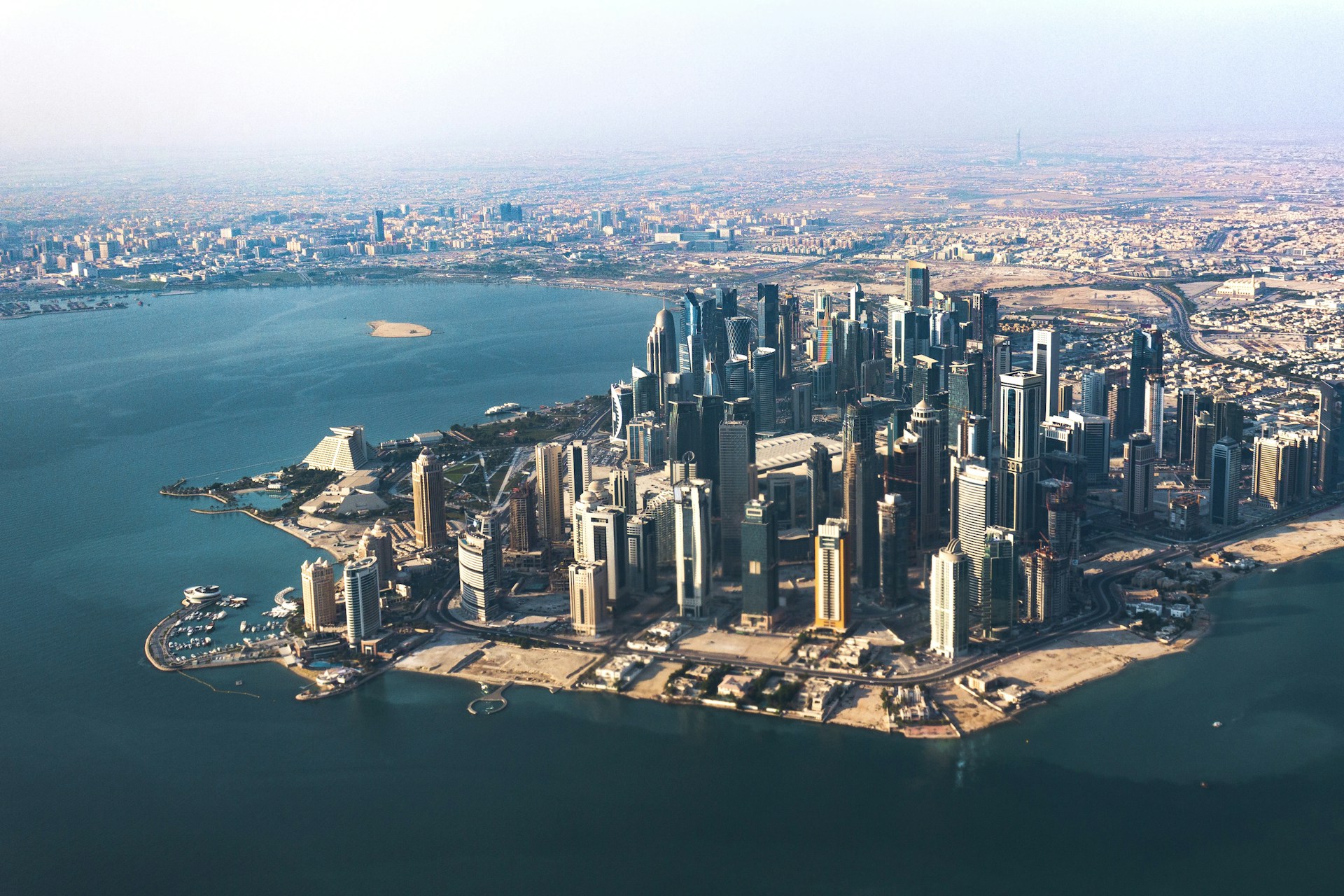
The capital is Doha (الدوحة), located on the central east coast and home to over 80% of Qatar's residents. Doha has transformed dramatically over the past two decades into a futuristic global city — its skyline of mirrored skyscrapers along the Corniche waterfront is one of the most striking in the world. The city is home to the iconic Museum of Islamic Art designed by I.M. Pei, the National Museum of Qatar designed by Jean Nouvel (inspired by the desert rose crystal), the bustling traditional Souq Waqif, the cultural complex of Katara, and the world-class Doha Corniche waterfront promenade. Doha was the centrepiece of the 2022 FIFA World Cup, the first World Cup ever held in the Middle East and in winter — an event that put Qatar on the global stage like never before.

Other notable areas include Lusail, a brand-new master-planned city north of Doha that hosted the World Cup final at the spectacular Lusail Stadium; The Pearl-Qatar, a luxury artificial island development; Al Wakrah, a historic fishing town now expanded into a modern suburb; Mesaieed, the country's industrial port city; and Al Khor, a fishing town in the north known for its mangroves. The vast inland desert is largely uninhabited, but the southern landscape includes the surreal Khor Al Adaid (Inland Sea) — a UNESCO-recognised tidal embayment where the sea meets towering desert dunes.

Qatar's geography is mostly flat and dry — over 90% of the country is desert. The terrain consists of low-lying sandy plains, coastal salt flats (called sabkhas), and rolling sand dunes in the south. The country has no permanent rivers or lakes, with all freshwater coming from massive desalination plants. The coastline stretches around 560 kilometres and includes numerous offshore islands. The climate is intensely hot — summers regularly exceed 45°C — with very little rainfall.

Culturally, Qatar is a fascinating blend of deep-rooted Bedouin and Arab tradition alongside rapid 21st-century globalisation. The official language is Arabic, though English is widely spoken — especially in business, government services, and education. Islam is the state religion, and the country observes traditional practices including Friday as the main day of communal prayer (the Qatari weekend runs Friday–Saturday). However, Qatar is more cosmopolitan than many of its Gulf neighbours: it hosts the headquarters of Al Jazeera (the influential Arabic-language news network), Education City (a hub of branch campuses from world-leading universities including Georgetown, Cornell, and HEC Paris), and an internationally renowned art and museum scene.

Economically, Qatar punches far above its weight. The country sits atop the world's third-largest natural gas reserves and is one of the world's largest exporters of liquefied natural gas (LNG). This has given Qatar one of the highest GDP per capita figures globally. The state-owned Qatar Investment Authority (QIA) is one of the world's largest sovereign wealth funds, with major holdings in companies and properties from London (Harrods, the Shard) to Paris and New York. The currency is the Qatari Riyal (QAR / ر.ق), pegged to the US dollar at approximately 3.64 QAR = 1 USD. Qatar Airways, the national carrier, operates one of the world's most awarded long-haul fleets out of Hamad International Airport, regularly voted the best airport in the world.

For travellers and business professionals, Qatar's stable single time zone and lack of daylight saving make scheduling incredibly straightforward — the country sits at UTC+3 every day of the year, comfortably positioned between European and East Asian business hours.

Qatar Time Zone Quick Facts

Time Difference Between Qatar and Major Cities

Qatar sits at UTC+3 year-round, placing it a few hours ahead of Europe, well ahead of the Americas, and behind East Asia and Australia.

Note: Differences vary slightly during Daylight Saving Time in countries that observe it. The Philippines itself does not.

Best Time to Call Qatar

From the United Kingdom

The UK is 2 to 3 hours behind Qatar depending on British Summer Time. The best window to call is between 8:00 AM and 4:00 PM UK time, which lands at 11:00 AM – 7:00 PM Doha time. UK morning calls catch the heart of the Qatari workday, making this one of the easiest international scheduling relationships from Europe.

From the United States

The US is far behind Qatar, so calls require some planning:

  • East Coast (New York): Call between 8:00 AM and 11:00 AM ET, which is 3:00 PM – 6:00 PM in Doha.

  • West Coast (Los Angeles): Call between 6:00 AM and 9:00 AM PT, which is 5:00 PM – 8:00 PM in Doha — late afternoon to early evening.

From Australia

Australia is 7 to 8 hours ahead of Qatar. Call between 3:00 PM and 6:00 PM AEST, which is 8:00 AM – 11:00 AM Doha time — Qatari morning hours, comfortable for both parties.

From Singapore

Singapore is 5 hours ahead of Qatar. Call between 2:00 PM and 6:00 PM SGT, which is 9:00 AM – 1:00 PM Doha time — Qatari morning to lunchtime.

From Dubai (UAE)

Dubai is just 1 hour ahead of Qatar — the easiest scheduling relationship Qatar has. Standard business hours align almost perfectly. Call any time between 9:00 AM and 6:00 PM Dubai time, which is 8:00 AM – 5:00 PM in Doha.

white high rise buildings during daytime

Famous Cities and Areas in Qatar

  • Doha — The capital and largest city; home to the iconic Corniche, Museum of Islamic Art, Souq Waqif, and the West Bay skyline.

  • Lusail — A brand-new futuristic city north of Doha; home to Lusail Stadium where the 2022 FIFA World Cup Final was played.

  • The Pearl-Qatar — A luxury artificial island development with marinas, fine dining, and high-end residences.

  • Al Wakrah — A historic fishing town turned modern suburb just south of Doha; home to Al Janoub Stadium.

  • Al Khor — A traditional fishing town in the north known for mangroves and the Al Khor Park.

  • Mesaieed — Qatar's industrial port city; gateway to the Khor Al Adaid (Inland Sea) and desert dunes.

  • Education City — A massive complex hosting branch campuses of Georgetown, Cornell, HEC Paris, and other world-class universities.

  • Katara Cultural Village — A waterfront cultural complex with theatres, galleries, restaurants, and the iconic Golden Mosque.

  • Khor Al Adaid (Inland Sea) — A UNESCO-recognised natural wonder where the sea meets towering desert dunes.

  • Souq Waqif — Doha's legendary traditional market, famous for spices, textiles, falconry, and authentic Qatari cuisine.

  • Aspire Zone (Doha Sports City) — The complex around Khalifa International Stadium, a centre for international sporting events.

  • Banana Island — A crescent-shaped resort island just off the coast of Doha.

Qatar Stock Exchange and Business Hours

Qatar's main financial exchange is the Qatar Stock Exchange (QSE) based in Doha, operating on Arabia Standard Time (UTC+3). Standard business hours across Qatar are typically 8:00 AM to 5:00 PM, Sunday to Thursday, with Friday and Saturday as the official weekend — Friday is the main day of communal prayer in Islam. Many businesses close for an extended midday break during the hottest summer months.

Note: NYSE/LSE hours shift by one hour during their respective Daylight Saving periods. Qatar time stays constant year-round.

a large sculpture in the middle of a body of water

What Qatar is Famous For

  • 2022 FIFA World Cup — The first World Cup ever held in the Middle East and the Arab world, and the first held in winter

  • Natural gas wealth — Qatar holds the world's third-largest natural gas reserves and is a top global LNG exporter

  • Qatar Airways — Repeatedly voted the world's best airline, with global hub Hamad International Airport

  • Al Jazeera — The influential Arabic-language and English-language global news network, headquartered in Doha

  • Doha skyline — One of the most futuristic city skylines in the world along the West Bay Corniche

  • Museum of Islamic Art — Designed by I.M. Pei, one of the most beautiful museums in the world

  • The Pearl-Qatar — A spectacular man-made luxury island development off the Doha coast

  • Falconry — Traditional Bedouin sport and a deeply cherished cultural heritage practice

  • Souq Waqif — One of the most atmospheric traditional Arab markets, famous for spices, gold, and Qatari cuisine

  • Khor Al Adaid (Inland Sea) — UNESCO-recognised desert wonder where the sea meets towering dunes

  • Education City — Branch campuses of leading global universities operating in Doha

  • High GDP per capita — Among the highest in the world, driven by gas exports and a small native population

Weather and Seasons in Qatar

Qatar has a desert climate with two main seasons rather than four — a hot summer and a mild winter. Rainfall is rare year-round, and humidity along the coast can be very high in summer.

Winter (December – February)

The most pleasant time of year. Temperatures range from a comfortable 15°C to 25°C with low humidity and clear blue skies. Winter is peak tourism and event season — international sporting events, outdoor festivals, and the popular Qatar International Food Festival all take place during these months. Evenings can feel cool, and rare rainfall sometimes occurs.

Spring (March – April)

Spring is short and warm. Temperatures climb steadily from around 25°C to 35°C, and the desert briefly comes alive with green patches and wildflowers after any winter rain. This is a great time for desert camping and outdoor activities before the summer heat sets in.

Summer (May – September)

Summers in Qatar are intensely hot. Daytime temperatures regularly hit 40–48°C, with extreme humidity along the coast in June and July making it feel even hotter. Most outdoor activity moves to the early morning or late evening, and locals retreat to air-conditioned shopping malls and indoor venues. Many residents travel abroad during peak summer (July–August), and many businesses operate reduced summer hours.

Autumn (October – November)

Autumn is when temperatures finally start to ease, dropping back from the brutal summer to a more bearable 28–35°C. By late October and November, evenings become cool again and the country slowly transitions back into outdoor-event season. The Qatar Grand Prix Formula 1 race is typically held in late autumn.

Facts About Qatar

  • No daylight saving, ever. Qatar has never adopted DST, making it one of the most stable clocks in the Middle East — UTC+3 every day of the year.

  • One country, one clock. The entire country runs on a single time zone, which is straightforward thanks to Qatar's small geographic size — you can drive across the country in a few hours.

  • Qatar shares its time zone with Saudi Arabia, Bahrain, Kuwait, Iraq, and Yemen — most of the Arabian Peninsula except Oman and the UAE (which are at UTC+4).

  • Friday-Saturday weekend. Like most Gulf states, the official weekend in Qatar runs Friday–Saturday, with Sunday being the start of the working week.

  • The 2022 World Cup was Qatar's biggest moment on the global stage — held in November–December specifically to avoid the brutal summer heat, the first time a World Cup ever changed seasons.

  • Doha is one hour behind Dubai. Despite being just an hour's flight away, Qatar (UTC+3) sits one hour behind the UAE (UTC+4) — a small but important detail for cross-Gulf business meetings.

white and red air plane flying in the sky during daytime

Frequently asked questions

What time zone is Qatar in?

Qatar is in Arabia Standard Time (AST) at UTC+3 year-round. This is the same time zone used by Saudi Arabia, Bahrain, Kuwait, Iraq, and Yemen, making cross-Gulf business straightforward. Qatar uses this single time zone across the entire country, with no regional variation between Doha, Al Khor, Mesaieed, or any other location in the country.

Is Qatar on the same time as Saudi Arabia?

Yes. Qatar and Saudi Arabia both operate on Arabia Standard Time (AST) at UTC+3, meaning there's zero time difference between Doha and Riyadh, Jeddah, or Dammam. This is also true for Bahrain, Kuwait, Iraq, and Yemen — all of which share the same UTC+3 offset, simplifying cross-border business in the northern Gulf region.

Does Qatar observe daylight saving time?

No, Qatar does not observe daylight saving time and never has. The country stays on UTC+3 every single day of the year, with no clock changes in spring or autumn. This is partly because Qatar sits relatively close to the equator — at around 25° north latitude, the difference between summer and winter daylight hours is small enough that DST wouldn't provide meaningful benefits.

What does AST stand for in Qatar?

AST in Qatar stands for Arabia Standard Time, the official time zone of Qatar and most of the Arabian Peninsula at UTC+3. The abbreviation can occasionally cause confusion globally because AST is also used for Atlantic Standard Time in parts of the Americas (UTC-4), which is a completely different zone. To avoid ambiguity in international communication, many businesses simply specify "Doha time" or "UTC+3".

How many time zones does Qatar have?

Qatar has just one time zone covering the entire country. From Doha on the central east coast to Al Khor in the north and Mesaieed in the south, every city, town, and village uses the same official Qatar time. Because Qatar is geographically small — you can drive across the country in just a few hours — a single time zone makes complete practical sense.

What is the best time to call Qatar from the UK?

The most practical window for calling Qatar from the UK is between 8:00 AM and 4:00 PM UK time, which corresponds to 11:00 AM to 7:00 PM in Doha. This means almost the entire UK working day overlaps with Qatari business hours, making UK–Qatar one of the easiest scheduling relationships from Europe. UK afternoon calls catch the late afternoon and early evening in Doha.

What is the time difference between Qatar and the UK?

Qatar is 3 hours ahead of the UK during British winter (GMT) and 2 hours ahead during British Summer Time (BST). When it's 9:00 AM in London during winter, it's already 12:00 PM in Doha. The difference shifts by one hour twice a year because the UK observes daylight saving time while Qatar does not, narrowing the gap during the European summer.

What is the time difference between Qatar and the United States?

Qatar is 7 to 8 hours ahead of New York (Eastern Time) and 10 to 11 hours ahead of Los Angeles (Pacific Time), depending on US daylight saving. When it's noon in Doha, it's 4:00 AM (or 5:00 AM in summer) in New York. This significant gap makes scheduling challenging — Qatari afternoon typically aligns with US morning, which is the most common business overlap window.

What is the best time to call Qatar from Australia?

The best window for calling Qatar from Sydney is between 3:00 PM and 6:00 PM AEST, which corresponds to 8:00 AM to 11:00 AM in Doha — Qatari morning hours when offices are fresh and ready for the day. Australian late afternoon works well because it lines up with the start of the Qatari workday, allowing both sides to remain within standard business hours.

What is the best time to call Qatar from the United States?

From the US East Coast, calling between 8:00 AM and 11:00 AM ET works well, landing at 3:00 PM to 6:00 PM in Doha — the second half of the Qatari working day. From the West Coast, calling between 6:00 AM and 9:00 AM PT lands at 5:00 PM to 8:00 PM in Doha. Early-morning US calls are the most reliable way to catch Qatari office hours during the same calendar day.

What is the time difference between Qatar and Australia?

Sydney is typically 7 to 8 hours ahead of Qatar depending on Australian daylight saving. During Australian summer (October to April), Sydney is 8 hours ahead of Doha; during Australian winter, the gap shrinks to 7 hours. This means early morning Doha calls land at the end of the Australian working day, while Australian morning calls catch the very start of the Qatari workday.

What time does Qatar's stock market open and close?

The Qatar Stock Exchange (QSE) opens at 9:30 AM AST and closes at 1:15 PM AST, Sunday through Thursday. Note that, like most Gulf countries, Qatar's trading week runs Sunday to Thursday — Friday and Saturday are the official weekend, with Friday being the main day of communal prayer. The exchange follows national and Islamic public holidays, including Eid al-Fitr and Eid al-Adha.

Is Doha time the same as Dubai time?

No — Doha (Qatar) is one hour behind Dubai (UAE). Qatar uses UTC+3 (Arabia Standard Time), while the UAE uses UTC+4 (Gulf Standard Time). When it's 12:00 PM in Doha, it's already 1:00 PM in Dubai. This is one of the most commonly confused regional time differences for travellers, since the two cities are only about an hour apart by flight.

What is Qatar's international calling code?

Qatar's international dialling code is +974, which must be dialled before any Qatari phone number when calling from overseas. Qatari phone numbers are 8 digits long after the country code (no area codes are used). Mobile numbers typically begin with 3, 5, 6, or 7, while landline numbers usually begin with 4. The full international format is simply +974 followed by the 8-digit number.