
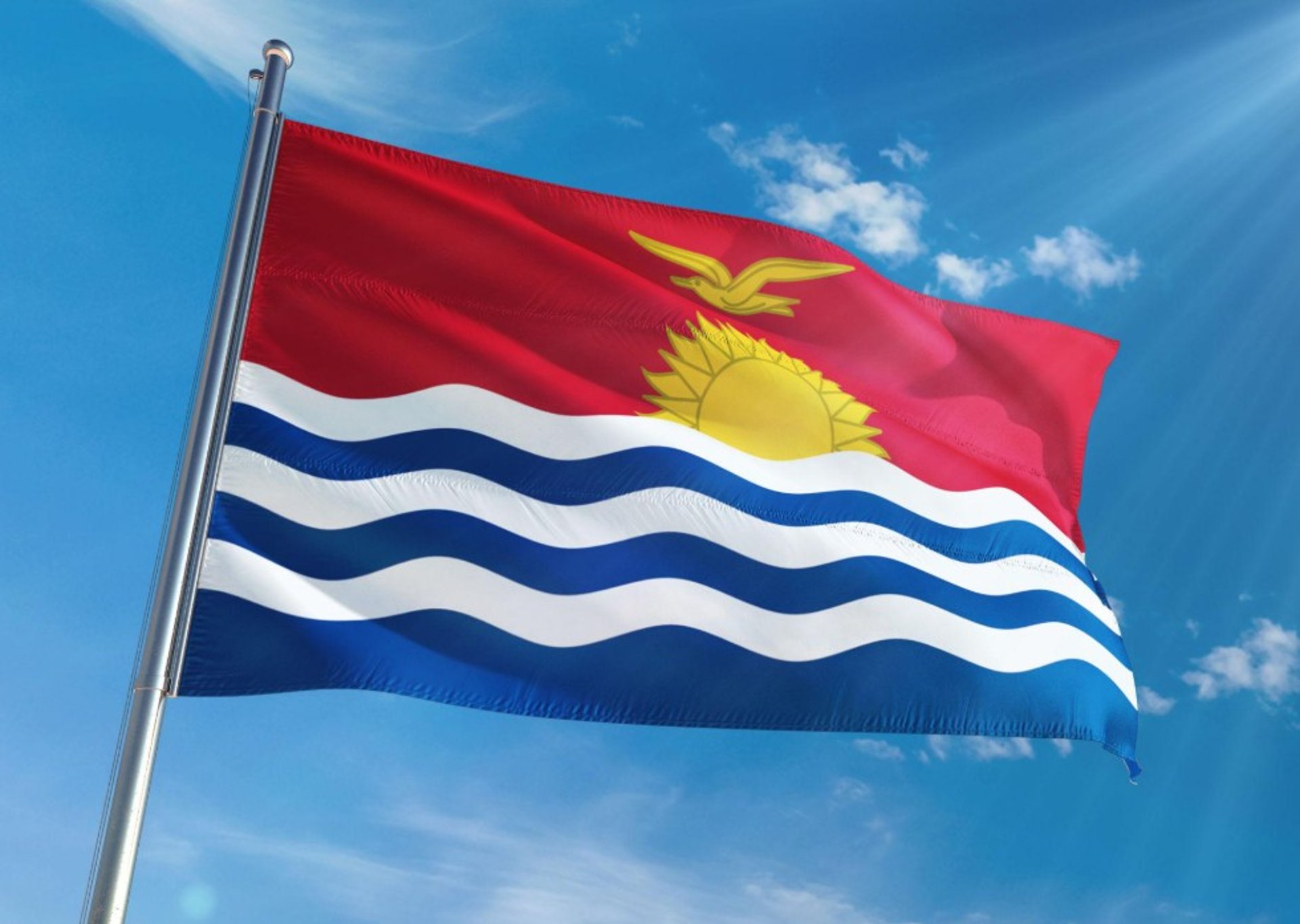
Kiribati Time Now
Stay updated with the current time in Kiribati and plan your calls, travel, and business activities with confidence. Kiribati uses three time zones: Gilbert Island Time (GILT) UTC+12, Phoenix Island Time (PHOT) UTC+13, and Line Islands Time (LINT) UTC+14.
Kiribati does not observe daylight saving time, so local time remains stable year-round.
Because Kiribati stretches across several island groups, the current time can vary depending on the island or region.
About Kiribati
Kiribati is a unique island nation located in the central Pacific Ocean, made up of 33 coral atolls and islands spread across a vast area of ocean. The country is famous for being one of the first places in the world to welcome a new day because some of its islands use the UTC+14 time zone.
The capital city of Kiribati is South Tarawa, which serves as the country’s political and administrative centre. Kiribati is divided into three island groups: the Gilbert Islands, Phoenix Islands, and Line Islands.
Kiribati has a tropical climate with warm temperatures throughout the year. The islands are surrounded by beautiful lagoons, coral reefs, and marine life, making fishing and ocean-based activities important to local communities and the economy.
The country’s economy mainly depends on:
Fishing and marine resources
Copra (coconut products)
Tourism
Government services
International partnerships and aid
Kiribati is internationally recognised for its role in discussions about climate change and rising sea levels, as many of its low-lying islands are vulnerable to coastal flooding and environmental changes.
English and Gilbertese (I-Kiribati) are the official languages spoken throughout the country. Traditional dance, storytelling, music, and strong community ties remain important parts of Kiribati culture.
Popular places and attractions in Kiribati include:
South Tarawa
Kiritimati (Christmas Island)
Phoenix Islands Protected Area
Coral lagoons and beaches
World War II historical sites
Traditional island villages
Kiribati combines Pacific island culture, ocean landscapes, and one of the world’s most unusual time zone systems, making it a fascinating country for geography, travel, and international time coordination.
Kiribati Quick Facts Table
Kiribati operates across three official time zones, meaning different islands may follow different local times depending on the region.
This keeps timekeeping organised across Kiribati’s island groups, including the Gilbert Islands, Phoenix Islands, and Line Islands, with major populated areas such as South Tarawa, Kiritimati (Christmas Island), Betio, Tabwakea, and Bikenibeu.
Kiribati follows:
Gilbert Island Time (GILT) – UTC+12
Phoenix Island Time (PHOT) – UTC+13
Line Islands Time (LINT) – UTC+14
Kiribati does not observe daylight saving time, so local time remains stable year-round without seasonal clock changes.
Because Kiribati stretches across a large area of the Pacific Ocean and crosses the International Date Line, some islands are among the first places in the world to enter a new day.
Understanding Kiribati Time
Kiribati’s time system is unique because the country operates across three different Pacific Ocean time zones: GILT (UTC+12), PHOT (UTC+13), and LINT (UTC+14).
Because Kiribati stretches across a vast area of the Pacific Ocean, international scheduling can vary depending on which island group or region is being referenced.
Daily life in Kiribati typically starts early in the morning, with schools, local markets, fishing communities, transport services, and government offices operating throughout the day, especially in South Tarawa, Betio, Bikenibeu, Tabwakea, and Kiritimati (Christmas Island).
For international coordination, knowing the current time in Kiribati is useful for planning:
Business meetings
International calls
Remote work schedules
Travel itineraries
Tourism activities
Online meetings and conferences
Kiribati does not observe daylight saving time, so local time remains stable throughout the year across all island groups.
Because some parts of Kiribati use UTC+14, the country includes some of the first populated places in the world to enter a new calendar day.
What Time Is It in Kiribati Right Now?
Kiribati Time vs Major World Cities
Kiribati operates across multiple Pacific Ocean time zones, including UTC+12, UTC+13, and UTC+14, making it one of the first countries in the world to enter a new day.
Because Kiribati maintains fixed time zones year-round, international time differences remain generally stable without seasonal clock changes.
Kiribati’s location in the central Pacific Ocean allows coordination with Australia, New Zealand, Asia, and the Americas, although time differences can be very large depending on the region.
Business and tourism activity in Kiribati is especially active in areas such as South Tarawa, Betio, Bikenibeu, Tabwakea, and Kiritimati (Christmas Island), where international communication and travel planning are common.
For global coordination:
Fiji and parts of New Zealand are usually close in time to Kiribati
Australia is generally several hours behind depending on the region
Japan and South Korea are usually 3–5 hours behind
Singapore, Malaysia, and China are generally 4–6 hours behind
India is typically several hours behind Kiribati
The United Kingdom is usually 12–14 hours behind depending on daylight saving time
The United States is significantly behind Kiribati depending on the state and season
Hawaii and parts of the Pacific may be nearly a full day behind some Kiribati islands
Knowing Kiribati’s time difference helps with:
International business communication
Remote work coordination
Online meetings and conferences
Airline schedules and travel planning
Tourism bookings
International events and livestreams
Family and international calls
Pacific region coordination
Note: Kiribati does not observe daylight saving time, so its time zones remain generally stable throughout the year. However, time differences with countries such as Australia, New Zealand, the United Kingdom, Asia, or the United States may still shift slightly when those countries adjust their clocks seasonally.
Best Time to Call Kiribati
From Australia
Kiribati is generally ahead of Australia, although the exact difference depends on the Australian state and which Kiribati island is being referenced.
Sydney / Melbourne: Kiribati is usually 1–3 hours ahead, depending on daylight saving time.
Brisbane: Kiribati is generally 2 hours ahead.
Perth: Kiribati is usually 4–6 hours ahead.
For business calls, aim for morning to afternoon in Australia (8:00 AM – 3:00 PM) to reach working hours in Kiribati.
From the United Kingdom
Kiribati is significantly ahead of the UK, so planning ahead is important.
Kiribati is usually 11–13 hours ahead of the United Kingdom depending on British Summer Time (BST).
Call between 7:00 PM and 11:00 PM UK time to reach daytime business hours in Kiribati.
This allows practical coordination for tourism, business, and international communication.
From the United States
The United States is significantly behind Kiribati, and some Kiribati islands are among the first places in the world to enter a new day.
East Coast (New York): Kiribati is usually 16–18 hours ahead.
West Coast (Los Angeles): Kiribati is generally 19–21 hours ahead.
Early evening calls in the United States are often needed to reach daytime hours in Kiribati.
From Asia
Asia is generally behind Kiribati, although work overlap is still possible.
Singapore / Malaysia / China: Kiribati is usually 4–6 hours ahead.
Japan / South Korea: Kiribati is generally 3–5 hours ahead.
India: Kiribati is around 6.5–8.5 hours ahead depending on the island region.
Morning to afternoon in Asia generally provides the best overlap.
From the Middle East
The Middle East is several hours behind Kiribati, making advance scheduling important.
Saudi Arabia / Kuwait / Qatar: Kiribati is generally 9–11 hours ahead.
Morning calls in the Middle East often align best with afternoon or evening hours in Kiribati.
This helps smooth coordination for business, tourism, remote work, airline schedules, and international meetings.
Famous Cities and Regions in Kiribati
South Tarawa — The capital and most populated area of Kiribati, known for government institutions, local markets, schools, ports, and business activity across connected islets.
Betio — A busy port town in South Tarawa recognised for shipping, fishing industries, World War II history, and commercial activity.
Bikenibeu — One of the largest urban areas in Kiribati, known for residential communities, schools, local services, and coastal scenery.
Kiritimati (Christmas Island) — The world’s largest coral atoll by land area, famous for sport fishing, birdlife, diving, eco-tourism, and being among the first places to enter a new day.
Tabwakea — The main settlement on Kiritimati Island, recognised for tourism services, fishing activities, and access to beaches and lagoons.
Abaiang Atoll — A scenic atoll north of Tarawa known for traditional village life, coconut plantations, beaches, and lagoon landscapes.
Butaritari — One of Kiribati’s greener northern islands, famous for tropical vegetation, historical World War II sites, and local agriculture.
Marakei — A traditional island community recognised for circular road systems, cultural heritage, peaceful villages, and lagoon views.
Phoenix Islands — A remote island group famous for marine biodiversity, coral reefs, protected conservation areas, and UNESCO World Heritage recognition.
Line Islands Region — A vast Pacific island region known for remote atolls, fishing grounds, eco-tourism, and some of the world’s earliest time zones including UTC+14.
Kiribati has a small island-based economy supported by fishing, tourism, coconut production, agriculture, maritime services, government administration, and regional trade.
The country does not operate a major international stock exchange, but financial services are supported through local banking systems and regional Pacific economic partnerships.
Key business sectors in Kiribati include:
Fishing and seafood exports
Tourism and eco-tourism
Coconut and copra production
Agriculture and small-scale farming
Maritime transport and shipping services
Retail and local trade
Telecommunications and mobile services
Government and public administration
Construction and infrastructure projects
Renewable energy and environmental programs
Business and commercial activity is mainly centred around South Tarawa, Betio, Bikenibeu, Tabwakea, and Kiritimati (Christmas Island).
Most business offices in Kiribati generally operate between 8:00 AM and 5:00 PM, Monday to Friday, although schedules may vary across different islands and regions.
Kiribati maintains strong economic and regional connections with Pacific nations through fishing industries, tourism, shipping routes, environmental cooperation, and regional trade partnerships.
Note: Kiribati follows multiple time zones across its islands, including UTC+12, UTC+13, and UTC+14, and does not observe daylight saving time. Time differences with countries such as Australia, Japan, China, the United Kingdom, or the United States may still shift slightly when those countries adjust their clocks seasonally.
Stock Exchange and Business Hours in Kiribati
What Kiribati Is Famous For
Remote Pacific Islands — Kiribati is famous for its beautiful tropical atolls, turquoise lagoons, white sand beaches, and remote island scenery spread across the Pacific Ocean.
Being One of the First Places to See a New Day — Parts of Kiribati, especially Kiritimati (Christmas Island), follow UTC+14, making the country one of the first in the world to welcome each new day and New Year celebrations.
Kiritimati (Christmas Island) — One of the world’s largest coral atolls, famous for sport fishing, diving, birdlife, eco-tourism, and stunning ocean landscapes.
Traditional Polynesian and Micronesian Culture — Kiribati has rich island traditions known for dancing, canoe building, storytelling, music, and community village life.
Fishing and Marine Life — The country is internationally recognised for tuna fishing, coral reefs, tropical fish, and marine biodiversity across its vast ocean territory.
Phoenix Islands Protected Area — One of the world’s largest marine protected areas, recognised for coral reefs, rare wildlife, and UNESCO World Heritage status.
World War II History — Islands such as Betio and Tarawa are historically important for major Pacific battles during World War II.
South Tarawa — The capital region is known for government institutions, local markets, ports, schools, and cultural centres.
Climate Change Awareness — Kiribati is globally known for raising awareness about rising sea levels and environmental challenges facing low-lying island nations.
Peaceful Island Lifestyle — Kiribati is admired for its relaxed pace of life, friendly communities, coconut palm landscapes, and traditional island living.
Weather and Seasons in Kiribati
Kiribati has a tropical ocean climate, with warm temperatures, sea breezes, sunshine, and humidity throughout the year across its coral atolls and islands.
🌞 Dry Season (April – October)
The dry season is generally sunnier, less humid, and more comfortable for outdoor activities and travel.
Temperatures often range from 26°C to 31°C
Trade winds help create cooler and breezier conditions
Lower rainfall compared to the wet season
Popular season for fishing, diving, beach trips, and island tourism
Good time for exploring Kiritimati (Christmas Island) and outer islands
🌧️ Wet Season (November – March)
The wet season brings higher humidity, tropical rainfall, and occasional storms.
Temperatures usually range from 27°C to 32°C
Rain showers can be heavy but are often short
Tropical thunderstorms may occur during some months
Lagoons, palm forests, and island vegetation become greener
Humidity levels are generally higher across the islands
🌿 Overall Climate Experience
Kiribati experiences a warm tropical climate year-round with abundant sunshine and ocean breezes across most islands.
Weather conditions are strongly influenced by the Pacific Ocean, with little temperature variation during the year compared to many larger countries.
The country remains hot and humid throughout most seasons, while coastal winds help moderate temperatures across populated islands such as South Tarawa and Kiritimati.
Facts About Kiribati
Kiribati uses three different time zones. The country spans a large area of the Pacific Ocean and uses UTC+12, UTC+13, and UTC+14.
Kiribati does not observe daylight saving time. Local time remains consistent throughout the year across all islands.
South Tarawa is the capital of Kiribati. It serves as the political, administrative, and economic centre of the country.
Kiribati is located in the central Pacific Ocean. The nation consists of dozens of coral islands and atolls spread across a vast ocean area.
Kiribati is one of the first countries in the world to see a new day. Some islands operate on UTC+14, making them among the earliest places to enter a new calendar day.
Kiribati is famous for its beautiful atolls and lagoons. The country features tropical beaches, coral reefs, turquoise waters, and marine biodiversity.
English and Gilbertese are the official languages of Kiribati. Gilbertese, also called I-Kiribati, is widely spoken across the islands.
Fishing and marine resources are important to Kiribati’s economy. Tuna fishing, coconut products, and ocean-related industries play major roles in local livelihoods.
Frequently Asked Questions About Kiribati
1. What time zone does Kiribati use?
Kiribati uses three time zones across its islands: UTC+12, UTC+13, and UTC+14 depending on the region.
2. Does Kiribati observe daylight saving time?
No. Kiribati does not use daylight saving time, so the clocks remain the same throughout the year.
3. What is the capital city of Kiribati?
The capital city of Kiribati is South Tarawa, located in the Gilbert Islands group.
4. Why is Kiribati famous for time zones?
Kiribati is famous because some of its islands are among the first places in the world to enter a new day, especially the Line Islands operating on UTC+14.
5. What languages are spoken in Kiribati?
The official languages are English and Gilbertese (I-Kiribati).
6. What currency does Kiribati use?
Kiribati uses the Australian Dollar (AUD) as its official currency.
7. What is the climate like in Kiribati?
Kiribati has a tropical ocean climate with warm temperatures, humidity, sunshine, and seasonal rainfall throughout the year.
8. What are the main industries in Kiribati?
Fishing, copra (coconut products), tourism, marine resources, and government services are important parts of Kiribati’s economy.
Explore More Country Time Zones
🌍 Closest Time Zones (Same or Near)
Tuvalu Time Now
Marshall Islands Time Now
Nauru Time Now
🌐 Major Global Markets
🧭 Pacific Regions & Nearby Countries
Samoa Time Now
Tonga Time Now
✈️ International Connections
Time Now Online
Time Now Online delivers accurate, real-time local time for cities, countries, and time zones worldwide. Compare time zones, convert time instantly, and plan meetings with ease using our fast, free tools.
About Us
Legal
© 2026. All rights reserved.
Time data is based on standard global time zone databases and updates automatically.
Places & Seasons
time & meetings
